
If you ask most ecommerce teams what they need to grow, the answer usually sounds familiar.
More traffic.
More content.
More ad spend.
More visitors.
And sometimes those things are absolutely true.
But after working across enough ecommerce websites and reviewing enough storefronts, a different pattern starts becoming difficult to ignore. Many stores are not struggling because people are not finding them. They are struggling because people arrive and fail to move forward.
Someone lands on a product page and leaves without adding to the cart.
Someone reaches checkout and disappears.
Someone searches for a product, gets frustrated, and exits.
Someone visits twice and still does not buy.
Those are not always traffic problems.
Very often, they are conversion problems.
That distinction matters because the solutions are completely different.
Traffic growth is usually about visibility.
Conversion growth is about confidence.
People buy when they feel certain enough to move.
And most Shopify apps are useful only when they reduce uncertainty at exactly the right moment.
The problem is that e-commerce teams rarely install apps this way.
A review app gets installed because competitors use reviews.
A popup tool gets added because email growth slowed.
An upsell widget appears because average order value dropped.
A chatbot gets added because support volume increased.
Over time, stores accumulate tools instead of solving customer hesitation.
The result is often more complexity, more scripts, more overlapping functionality, and a buying experience that feels engineered instead of helpful.
This guide takes a different approach.
Instead of ranking Shopify apps by popularity alone, we grouped them according to the actual conversion problems they solve.
Because the better question is not:
What are the best Shopify apps?
It is:
What is preventing people from buying today?
Once that becomes clear, choosing software becomes much easier.
Most Shopify Stores Don’t Have a Traffic Problem. They Have a Conversion Problem
One of the easiest mistakes in e-commerce is assuming growth follows traffic.
Traffic is visible.
Conversion friction is quieter.
When stores stop growing, teams often increase acquisition before investigating what happens after the click.
But shoppers leave clues.
People hesitate for reasons.
They rarely abandon because they suddenly lose interest.
More commonly:
- They do not trust the store yet.
- They cannot tell products apart.
- They are overwhelmed by options.
- They have unanswered questions.
- They intend to return later and never do.
These moments appear throughout the customer journey.
Someone seeing your brand for the first time usually needs reassurance.
Someone browsing a large catalogue usually needs direction.
Someone already in checkout usually needs confidence.
Different problems require different tools.
That is why conversion optimisation is less about adding software and more about understanding friction.
A useful way to think about Shopify conversion is through five levers.
Trust
Do shoppers believe the product and the business?
Discovery
Can shoppers quickly find the right product?
Decision
Is choosing easy or mentally exhausting?
Recovery
Can interested buyers return naturally?
Support
Can questions get answered before abandonment?
The strongest stores improve these areas before layering more growth initiatives.
Apps become powerful only after the friction becomes clear, which is why strategic Shopify app development matters more than adding random tools
What Shopify Merchants Actually Say Works
If you spend enough time reading discussions between Shopify merchants, one thing becomes obvious.
The conversations become less about hacks and more about restraint.
Store owners who have operated for years rarely talk about installing ten more apps.
They talk about removing things.
Reducing complexity.
Making decisions easier.
Building cleaner storefronts.
That does not mean apps do not matter.
It means apps work best when they solve a specific customer problem rather than becoming permanent decorations.
One pattern appears repeatedly.
Many merchants regret adding advanced personalization before establishing trust.
They invest in recommendation engines while product pages still feel weak.
They install upsells before customers trust pricing.
They build sophisticated recovery sequences while discovery still feels confusing.
Interestingly, another repeated theme is that some of the highest ROI changes are surprisingly simple.
Better reviews.
Cleaner navigation.
Stronger product education.
Faster answers.
Better search.
Not necessarily more technology.
That mindset shaped how we selected tools in this guide.
Rather than asking: Which Shopify apps are most popular?
We asked: Which apps consistently remove buying friction?
The First Conversion Lever: Building Trust Before Asking for the Sale
Before shoppers buy from a new store, they are usually trying to answer one question.
“Can I trust this?”
This happens whether they consciously realise it or not.
Trust appears in small moments.
Reviews.
Customer photos.
Evidence.
Clarity.
Proof.
The absence of trust creates hesitation.
And hesitation destroys conversion.
That is why trust tools often outperform more advanced optimization tools early in a store’s lifecycle.
1. Judge.me: The Strongest Starting Point for Most Stores
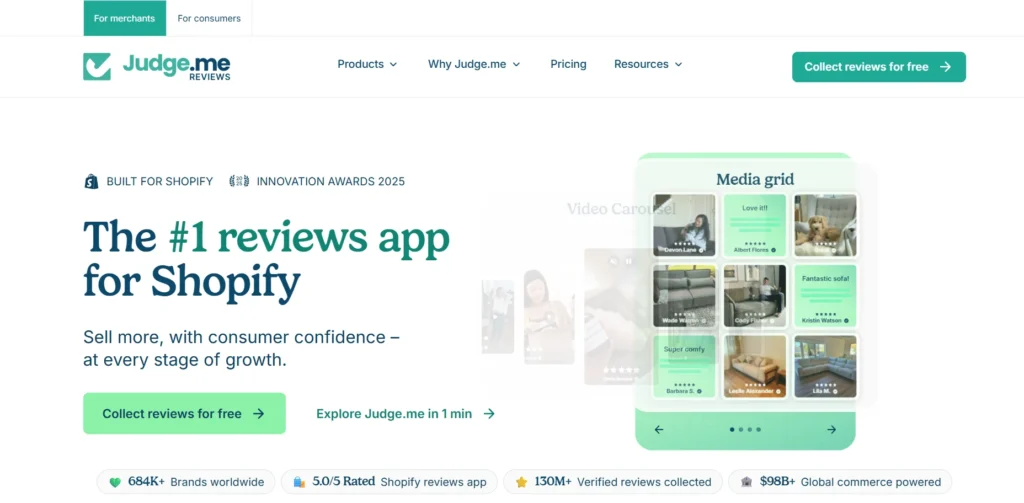
There is a reason this app appears repeatedly when merchants discuss practical Shopify stacks.
Judge.me solves one of e-commerce’s oldest challenges in a relatively uncomplicated way.
People trust people.
Instead of relying entirely on product descriptions, brands can collect and display customer reviews, photos, videos, and social proof directly where decisions happen.
What makes Judge.me interesting is not sophistication.
It is simplicity.
For smaller and growing brands, implementation tends to feel manageable, and stores can begin creating trust signals without redesigning their storefront.
Where we see this helping most:
- A skincare brand trying to show texture and results.
- A clothing store helping buyers understand fit.
- A home goods store is reducing uncertainty around quality.
Reviews become valuable when they answer objections before shoppers articulate them.
That said, more reviews do not automatically improve conversion.
Pages overloaded with widgets, endless testimonials, and repetitive social proof often become harder to scan.
Trust should reduce thinking.
Do not create more of it.
When Judge.me usually makes sense
Stores build trust infrastructure without needing enterprise-level customer content workflows.
2. Loox: When Visual Confidence Matters More Than Volume
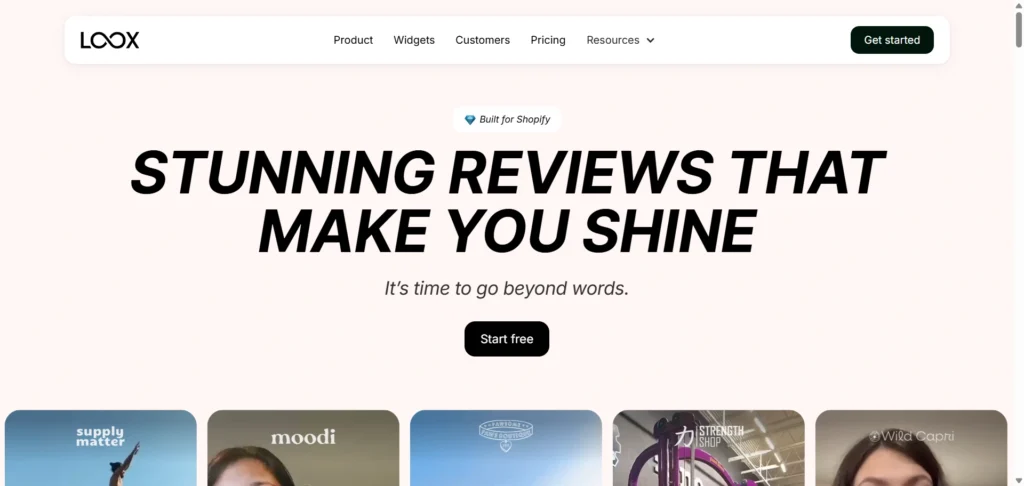
Some products benefit from explanation.
Others benefit from being seen.
Loox becomes particularly effective when visuals influence buying decisions.
Beauty.
Fashion.
Lifestyle.
Interior products.
Anything where customers naturally ask: “How does this actually look in real life?”
Product photography is controlled.
Customer content feels believable.
That difference matters.
Photo reviews reduce the gap between brand promise and customer expectation.
When implemented well, Loox often becomes less about collecting reviews and more about creating visual reassurance throughout the journey.
However, the strongest implementations tend to curate content intentionally.
Not every customer image improves confidence.
Relevance matters more than quantity.
3. Yotpo: Turning Trust Into a System
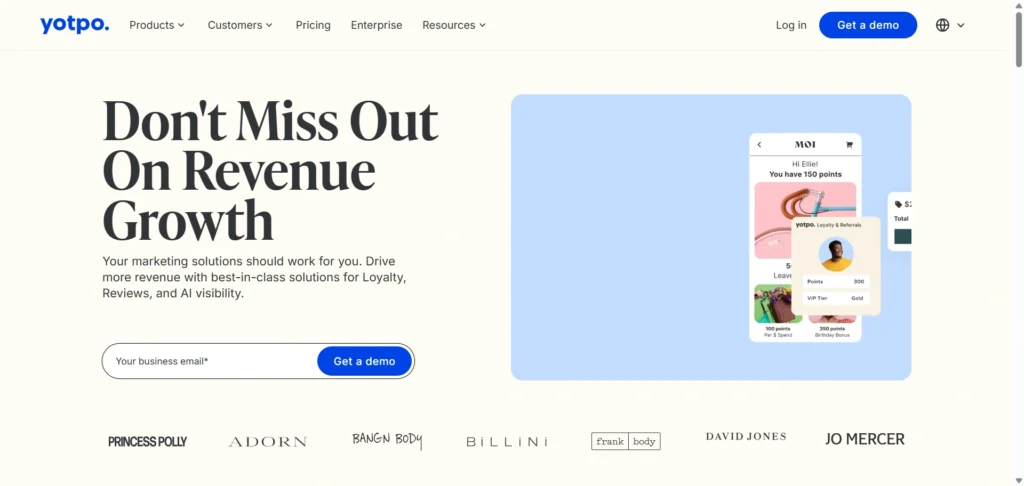
As stores mature, trust becomes more operational.
It moves beyond collecting reviews.
Brands start asking larger questions.
- How do customer experiences reinforce product positioning?
- How do reviews support retention?
- How should user-generated content appear throughout the journey?
- This is where Yotpo often enters the conversation.
Yotpo extends beyond reviews and begins connecting customer content, loyalty, and engagement.
That makes it particularly relevant for larger brands, treating customer trust as an ongoing business function rather than a widget installed once and forgotten.
That does not automatically make it the right choice for every store.
Many businesses grow comfortably before needing this level of infrastructure after completing a realistic Woocommerce vs Shopify cost comparison.
The point is not sophistication.
The point is solving the right problem at the right stage.
A Simple Rule Before Installing Any Trust Tool
Before adding software, ask:
- If I removed the app tomorrow, what hesitation would return?
- If the answer is unclear, the issue may not be trust.
- It may be product positioning, messaging, navigation, pricing, or experience.
Tools amplify what already exists.
When the experience is clear, they make it easier to buy.
When it is confusing, they make the confusion more visible.
The Second Conversion Lever: Increasing Average Order Value Without Making the Store Feel Pushy
One of the most misunderstood goals in e-commerce is increasing average order value.
When revenue slows, many stores immediately start thinking about upsells.
Add more recommendations.
Push bundles.
Offer upgrades.
Insert more offers into checkout.
But shoppers do not usually buy more because a store asks louder.
They buy more because additional choices feel relevant.
There is an important difference.
Good upsells feel helpful.
Bad upsells interrupt momentum.
The strongest conversion programs do not ask: “How do we sell more?”
They ask: “How do we make the next decision easier?”
That mindset changes how recommendation tools should be evaluated.
4. Rebuy: Personalisation That Works Best When Intent Already Exists
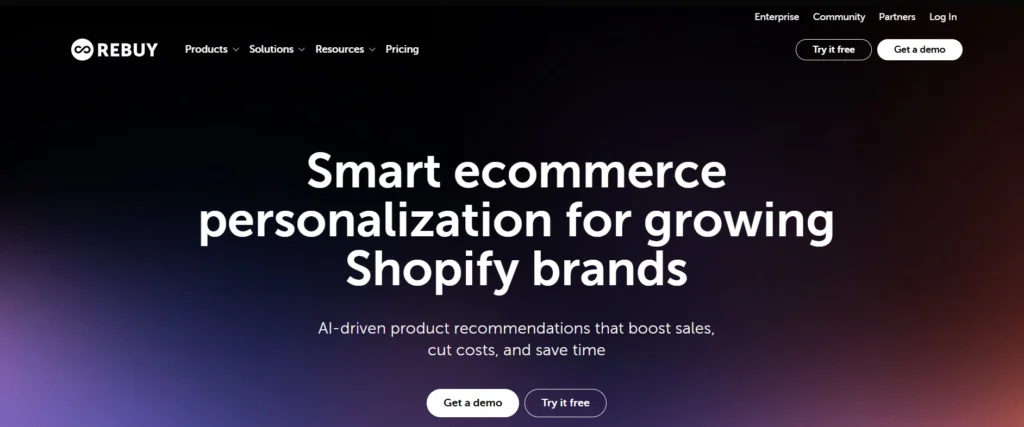
Rebuy has become one of the most discussed Shopify growth tools because it sits at an interesting point between merchandising, personalisation, and revenue optimisation.
At first glance, it looks like an upsell engine.
In practice, it works more like a decision-support layer.
The platform helps stores present relevant products across the storefront, cart, and post-purchase journey based on customer context.
That matters because recommendation quality influences whether customers continue buying or become overwhelmed.
Imagine three examples.
- Someone buying protein powder sees a shaker and a creatine bundle.
- Someone buying skincare sees products designed for the same routine.
- Someone purchasing camera equipment sees compatible accessories.
Those suggestions feel natural.
Now compare that with random bestseller widgets.
One supports intent.
The other creates more work.
That is usually the difference between successful and unsuccessful recommendation strategies.
Where Rebuy tends to perform best:
- stores with established traffic
- larger catalogues
- brands with multiple complementary products
- Teams willing to actively optimise recommendations
Where stores sometimes regret implementation:
- low traffic stores
- weak product pages
- generic recommendation logic
If product pages are not converting yet, personalisation rarely fixes the root issue.
5. Aftersell: One of the Most Underrated Revenue Moments in Ecommerce
Most e-commerce teams spend enormous effort getting someone through checkout.
Then the experience ends.
That is why post-purchase optimization remains one of the most underused opportunities in Shopify.
AfterSell focuses on what happens immediately after trust peaks.
The shopper has already purchased.
They already believe.
Their payment details already exist.
At that moment, thoughtful offers often feel easier to accept than during checkout.
Used intelligently, post-purchase offers can increase order value without creating additional pre-purchase friction.
The mistake is assuming every order needs another offer.
Some categories benefit.
Others feel excessive.
For example:
- Beauty brands often succeed with replenishment suggestions.
- Home brands often succeed with accessories.
- Subscription brands often succeed with bundles.
- The goal is not to extend checkout forever.
It is preserving buying momentum.
6. Bold Upsell: Best for Stores That Already Understand Their Buying Patterns
There are stores where upsells feel obvious.
There are stores where they feel intrusive.
Bold sits in the middle.
It gives teams more flexibility in introducing cross-sells, upgrades, and bundled offers throughout the customer journey.
What matters here is sequencing.
A common mistake is offering upgrades before customers understand the core product.
People rarely want more choices at the beginning of the journey.
They become more open once confidence increases.
That is why the strongest implementations tend to appear:
- after product understanding
- near cart
- after purchase
rather than immediately on landing.
The Third Conversion Lever: Recovering Buyers Who Already Wanted to Purchase
One of the most expensive habits in e-commerce is repeatedly paying to reacquire people who already showed intent.
Someone visited.
Browsed.
Added to cart.
Left.
And the response becomes:
buy more traffic.
That can work.
But recovery is often cheaper.
Recovery systems are not about chasing people.
They are about helping customers continue decisions they have already started.
7. Klaviyo: Still the Benchmark for Behaviour-Based Recovery
Klaviyo became popular because it treats customer communication as behaviour rather than campaigns.
Instead of sending a single newsletter to everyone, stores can create action-based responses.
Viewed product.
Abandoned checkout.
Completed purchase.
Returned visitor.
Over time, this creates a more connected buying journey.
The strongest Klaviyo flows usually feel invisible.
The shopper does not feel marketed to.
They feel remembered.
Examples that often work well:
- A reminder after abandoned checkout.
- Educational content after browsing.
- Product replenishment timing.
- Cross-category recommendations.
- The caution here is overengineering.
Many stores create dozens of flows before mastering three.
Recovery improves when messages stay useful.
8. Omnisend: Strong for Stores Wanting Simpler Automation
Not every store needs enterprise-level complexity.
Omnisend appeals to teams wanting email and SMS without building extensive automation infrastructure.
That simplicity can actually improve execution.
Because an imperfect recovery system launched today often beats a perfect system delayed for months.
9. Privy: Useful When Growth and Capture Need to Happen Together 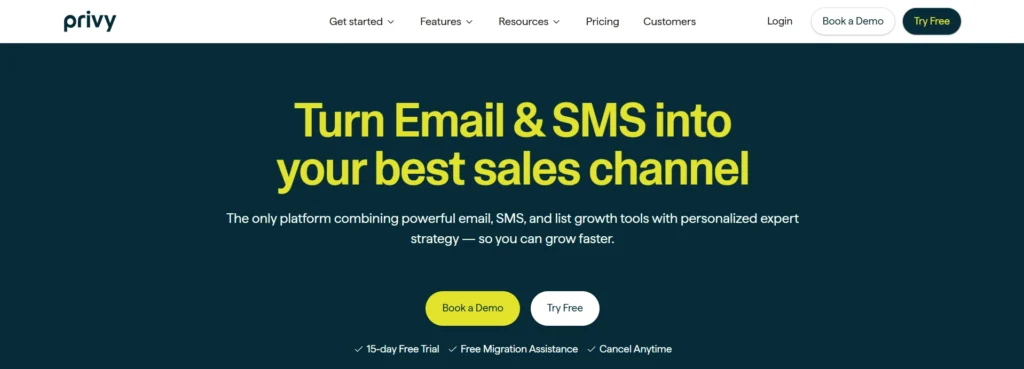
Privy tends to work best when stores are still building owned audiences.
Exit-intent prompts.
Email capture.
Cart reminders.
These mechanisms can work well.
But this category creates some of ecommerce’s most frustrating experiences when misused.
Every pop-up competes with buying.
Capture should never interrupt confidence.
A Better Question Than “Which Recovery Tool Is Best?”
Ask:
- If a customer leaves today, what would make them return?
- Price?
- Confidence?
- Timing?
- Education?
The answer should shape the tool. Not the other way around. If you are unsure where your conversion friction exists, talk to us.
Our Recommended Revenue Stack by Growth Stage
Early Store
- Judge.me
- Klaviyo
- Microsoft Clarity
Keep operations simple by following a structured Shopify store setup checklist before expanding your app stack.
Growth Store
- Loox
- Rebuy
- Klaviyo
- Boost AI Search
Improve buying momentum.
Established Brand
- Yotpo
- AfterSell
- Triple Whale
- Gorgias
Turn conversion into an operating system.
The Fourth Conversion Lever: Helping Shoppers Find the Right Product Faster
One of the most expensive conversion leaks in e-commerce happens quietly.
Someone already wants to buy.
They search.
They cannot find what they need.
They leave.
This is why product discovery is one of the most underrated parts of conversion optimization.
Teams often obsess over product pages and checkout experiences while ignoring the fact that customers never reach those pages in the first place.
This becomes more visible as catalogues grow.
A store with ten products can survive mediocre search.
A store with hundreds or thousands usually cannot.
Discovery is not only about navigation.
It is about reducing the amount of thinking required to move forward.
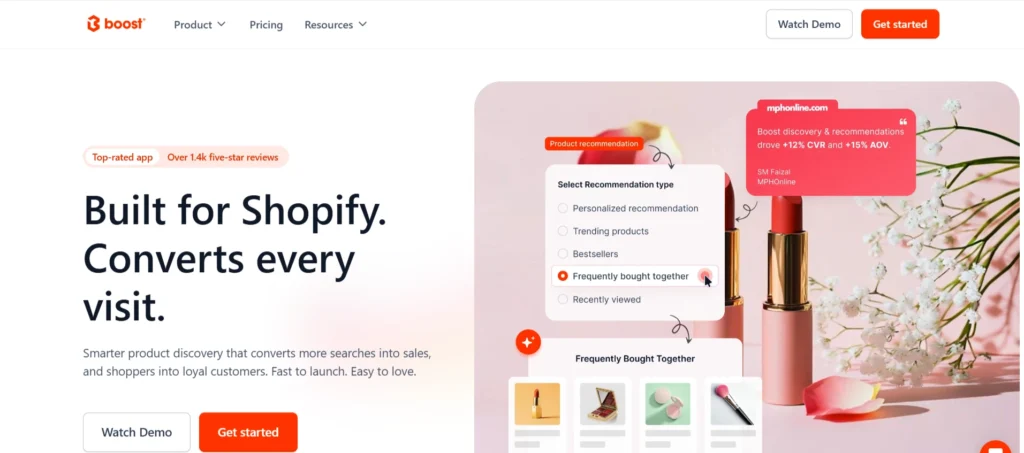
10. Boost AI Search & Discovery: One of the Highest-Leverage Improvements for Large Catalogues
Search behaviour is different from browsing behaviour.
People who search are often closer to making a purchase.
They have intent.
They know what they want, even if they do not describe it perfectly.
The challenge is that shoppers rarely use catalogue language.
A customer might search:
- “black gym bottle”
- while products are categorized as:
- “Matte insulated hydration flask.”
Search fails.
Purchase disappears.
Boost AI Search improves discovery by making search more forgiving and filtering more useful.
Its biggest value is usually not artificial intelligence.
It is reducing dead ends.
Strong implementations tend to improve:
- time to product discovery
- category engagement
- search success
- product exploration
Where it performs especially well:
- apparel
- beauty
- supplements
- electronics
- large catalogues
One thing stores underestimate is filtering.
Good filters do not create more choices.
They eliminate irrelevant choices.
That distinction matters.
11. Searchanise: A Practical Option for Stores That Need Better Search Without Complexity
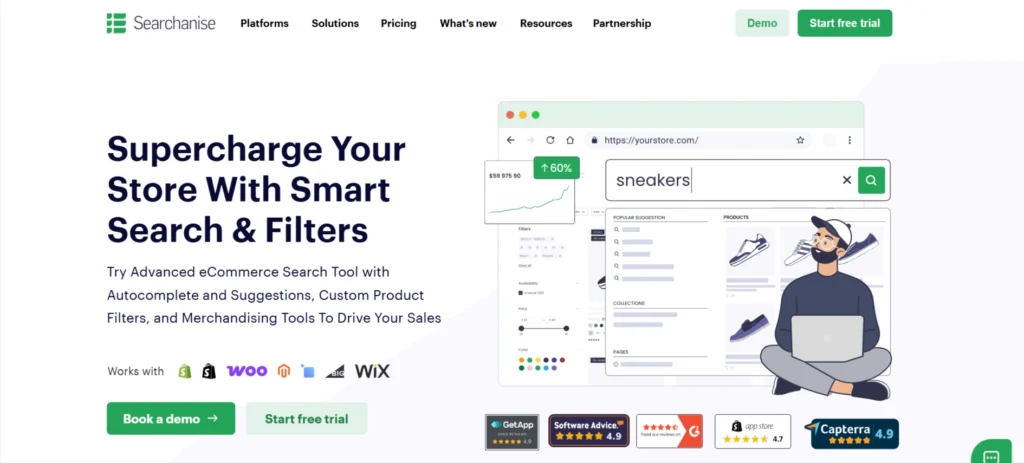
Searchanise tends to appeal to stores that want better discovery without introducing operational overhead.
Its strength is that improvements become visible quickly.
Products surface faster.
Autocomplete improves.
Filtering feels cleaner.
Customers reach decisions with fewer clicks.
For growing stores, those small improvements often compound.
The mistake is assuming search is only a usability improvement.
Good search frequently protects revenue, especially when supported by scalable custom Shopify development services.
Because frustrated shoppers rarely announce they are leaving.
They simply disappear.
The Fifth Conversion Lever: Reducing Hesitation Before Checkout
One of the least discussed conversion blockers is uncertainty.
Not confusion.
Not pricing.
Questions.
Simple questions.
When will this arrive?
Will this fit?
Can I exchange it?
Which one should I choose?
Can someone help me?
Many stores assume customers will search FAQ pages.
Most customers do not.
If questions appear at the wrong moment, abandonment happens.
Support tools work best when they answer decisions, not tickets.
12. Gorgias: Turning Customer Support Into Conversion Support 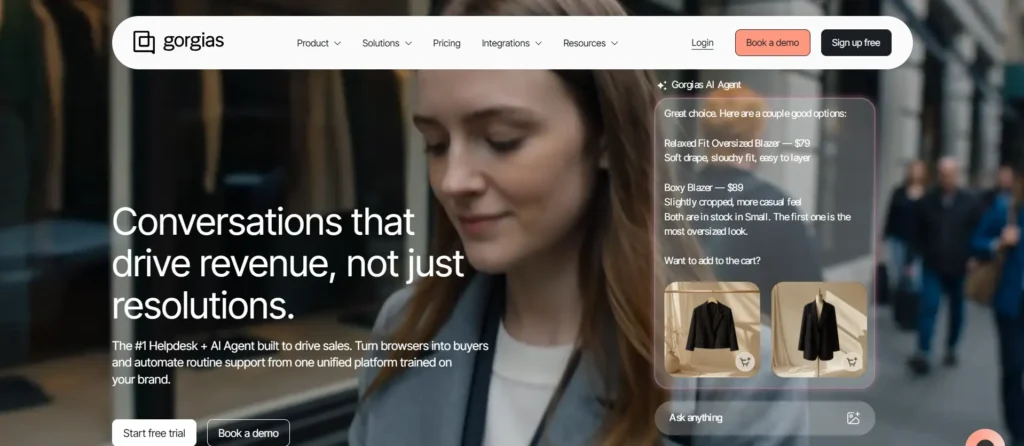
Gorgias is often introduced as a support platform.
But for e-commerce, its biggest impact frequently happens before purchase.
Support becomes conversion infrastructure.
When implemented thoughtfully, shoppers do not feel like they are opening support.
They feel like they are getting unstuck.
The strongest use cases tend to involve:
- delivery questions
- compatibility questions
- size concerns
- recommendation requests
Support should not feel like escalation.
It should feel like reassurance.
Where Gorgias becomes particularly useful is when support volume starts growing faster than internal bandwidth.
But the tool itself is not the solution.
The workflow is.
Fast responses matter.
Relevant responses matter.
Ownership matters.
13. Tidio: Useful When Stores Need Speed Without Building a Support Team
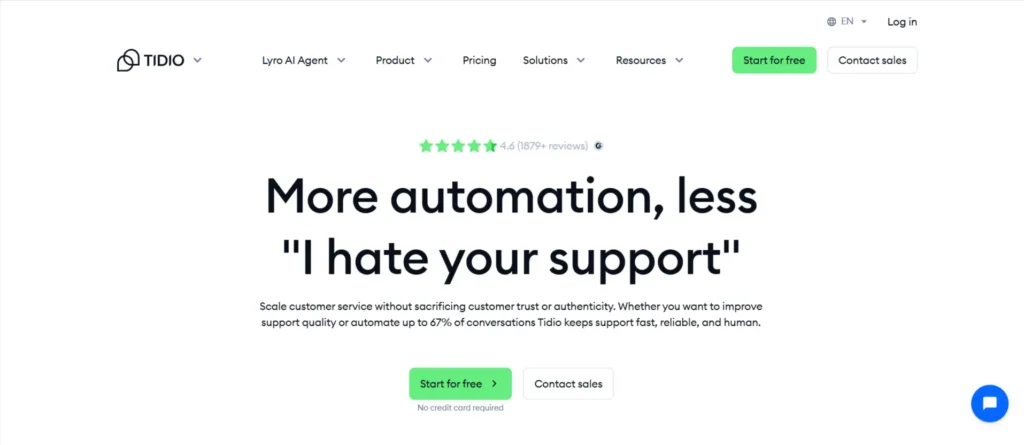
Tidio sits in a category that has become increasingly important.
Immediate reassurance.
Customers increasingly expect answers during consideration, not after purchase.
That does not mean every store needs live agents.
But shoppers often need enough confidence to continue.
Tidio combines live chat with automation and works particularly well for stores with recurring questions.
Examples:
- “Do you ship internationally?”
- “When will this arrive?”
- “Which version should I choose?”
The strongest implementations do not try to replace humans.
They reduce repetitive uncertainty.
Understanding Why People Leave Is Sometimes More Valuable Than Installing New Apps
One of the easiest traps in e-commerce is assuming performance issues require new tools.
Sometimes they require visibility.
Not into traffic.
Into behaviour.
You do not always need another widget.
You might need a better understanding.
14. Microsoft Clarity: One of the Highest ROI Tools Most Stores Underuse
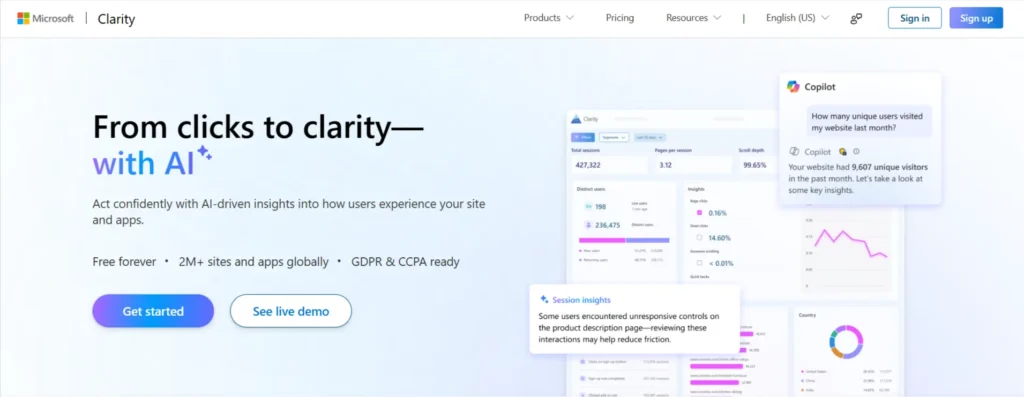
Clarity solves a different problem.
Instead of asking: “How do we improve conversion?”
It asks: “What is frustrating users today?”
Heatmaps.
Session recordings.
Interaction patterns.
Clarity often reveals problems teams did not realise existed.
Examples:
- Buttons people think are clickable.
- Mobile layouts are creating friction.
- Forms being abandoned.
- Content hidden below scroll depth.
Many of the highest ROI improvements do not come from adding features.
They come from removing obstacles.
Clarity helps identify them.
And the fact that it remains accessible makes it one of the easiest recommendations in this guide.
15. Triple Whale: Seeing Ecommerce Beyond Platform Metrics
As stores scale, performance questions become more complicated.
Which channels drive revenue?
What creates retention?
What actually influences conversion?
Triple Whale helps centralize those signals.
Its value becomes clearer as teams start making investment decisions across channels rather than optimizing isolated campaigns.
This is less of a beginner tool.
And more of an operational layer.
Shopify Apps We Would Skip Unless You Truly Need Them
Not every store needs more software.
Sometimes the better move is simplification.
Be cautious about:
Installing multiple review platforms.
Running several popup tools.
Adding upsells before fixing product pages.
Launching quizzes without recommendation logic.
Layering search solutions unnecessarily.
Buying analytics tools before reviewing existing data.
A useful question before every installation: What customer hesitation does this remove?
If the answer feels vague, wait.
Our Final Shopify App Recommendations by Store Stage
If You’re Starting
Keep it lean.
- Judge.me
- Klaviyo
- Microsoft Clarity
Focus on: trust, recovery, learning.
If You’re Growing
- Loox
- Boost AI Search
- Klaviyo
- Rebuy
Focus on: momentum and discovery.
If You’re Scaling
- Yotpo
- AfterSell
- Triple Whale
- Gorgias
Focus on: systems and efficiency.
Final Thoughts: Tools Don’t Increase Conversion. Better Decisions Do.
It is easy to look at successful e-commerce brands and assume growth came from a sophisticated tech stack.
Usually, the reality is less dramatic.
Strong stores tend to understand their customers better.
They reduce uncertainty faster.
They make buying feel easier.
Then they choose tools that reinforce those decisions.
That is why the best Shopify apps are rarely the ones with the most features.
They are the ones solving the most expensive hesitation.
If there is one takeaway from this guide, let it be this:
Do not ask: What apps should we install?
Ask: What is making people hesitate today?
The answer will usually tell you which tool deserves to exist.
Frequently Asked Questions About Shopify Conversion Apps
What is the best Shopify app for increasing conversions?
There is no single best Shopify conversion app because conversion problems are rarely identical.
If trust is the issue, review platforms such as Judge.me or Loox usually create more impact.
If shoppers already trust the brand but leave without completing purchases, recovery tools like Klaviyo often become more valuable.
If customers struggle to find products, search tools such as Boost AI Search & Discovery may deliver larger gains than another marketing app.
The better question is: What hesitation exists in your current buying journey?
Can too many Shopify apps reduce conversion?
Yes.
This is one of the most repeated themes among ecommerce operators.
Too many apps can introduce:
- slower page loading
- visual clutter
- overlapping functionality
- conflicting scripts
- inconsistent experiences
The goal should not be building the largest stack.
It should be building the clearest buying journey.
A store with six well-implemented tools often outperforms a store running twenty apps.
Are paid Shopify apps worth it?
Sometimes.
But only after the underlying problem is validated.
A premium recommendation engine will not fix weak product positioning.
Advanced analytics will not solve confusing navigation.
Enterprise review infrastructure will not help if customers still do not trust the offer.
A simple rule:
If a paid app removes measurable friction, it is usually worth testing.
If it adds complexity without changing behaviour, reconsider.
What is a good Shopify conversion rate?
Conversion rates vary heavily by category, traffic source, pricing, audience familiarity, and product complexity.
Trying to copy benchmark numbers without context usually creates poor decisions.
Instead of asking:
“What is a good conversion rate?”
ask:
“Is our conversion improving over time?”
Track:
- add-to-cart rate
- checkout completion
- returning visitor conversion
- average order value
- revenue per visitor
Those often reveal more than one headline number.
Should I install upsell apps before improving product pages?
Usually no.
Upsells amplify momentum.
They rarely create momentum.
If visitors are not buying the core product confidently, introducing more decisions often increases friction.
Prioritize:
- Product clarity
- Trust
- Discovery
- Recovery
- Expansion
Then layer upsells.
Is Shopify search really that important?
More than many teams expect.
Search users are often among the highest-intent visitors.
If someone already knows what they want and cannot find it quickly, the rest of the experience becomes irrelevant.
Strong search and filtering frequently protect conversion rather than directly increasing it.
Is Klaviyo still worth it in 2026?
For stores using behaviour-based email and SMS, it remains one of the strongest platforms available.
But it is most effective when stores actively maintain flows and customer journeys.
Many brands underuse the platform by sending campaigns while ignoring automation.
If your operation needs simplicity first, alternatives may make more sense.
What is the first app you would install on a brand-new Shopify store?
Assuming the store already has products and traffic:
First: Trust
Second: Recovery
Third: Behaviour insight
That usually means:
- Review platform
- Email recovery
- Analytics
Only after those foundations would we introduce personalization or advanced optimisation.