
Most marketing teams do not wake up thinking: “We need another tool.”
They wake up thinking:
- Why are leads dropping?
- Why are reports inconsistent?
- Why are sales saying marketing leads are weak?
- Why are campaigns taking too long?
- Why does nobody trust the dashboard?
Then software gets purchased:
- A CRM.
- An automation platform.
- A reporting dashboard.
- A content tool.
- A lead enrichment platform.
- A chatbot.
- A meeting scheduler.
Six months later, the company has more subscriptions and roughly the same operational problems.
Not because the tools are bad.
But because most teams accidentally build collections of software instead of systems.
This is where HubSpot becomes interesting.
HubSpot has spent years positioning itself as a growth platform rather than a CRM alone. And for many companies, it becomes the place where customer information, campaigns, sales activity, content, reporting, and workflows start connecting.
But there is something important that experienced teams usually realise eventually.
HubSpot was never designed to do everything.
And it probably should not.
The strongest marketing teams rarely run HubSpot in isolation.
Instead, they connect tools around it.
One platform enriches lead data.
Another creates content.
Another automates repetitive work.
Another helps teams understand what happened.
Another improves customer conversations.
The result is not more software.
The result is a marketing operating system.
That is what this guide explores.
Not the best HubSpot integrations in theory.
But the kinds of AI and automation tools modern teams connect to HubSpot to reduce manual work, improve decision making, and create smoother customer journeys.
Because adding software is easy.
Making software work together is where growth usually starts.
HubSpot Is Powerful. But It Was Never Meant To Work Alone.
There is an idea that appears often in software buying conversations:
“If we buy the right platform, most of our problems will disappear.”
That rarely happens.
Marketing operations become complicated because customer journeys become complicated.
Someone discovers your brand.
Reads content.
Downloads something.
Opens emails.
Books a demo.
Talks to sales.
Disappears.
Returns.
Buys.
Expands.
No single platform naturally owns all of that perfectly.
HubSpot gets close because it sits in the middle.
But the strongest teams usually surround it with tools that do one job exceptionally well.
Different functions create value:
- Lead intelligence tells you who entered the system.
- Content tools influence what they consume.
- Automation determines what happens next.
- Communication platforms move conversations forward.
- Analytics explains whether anything worked.
HubSpot becomes more valuable as these systems become more connected.
The danger is assuming every integration deserves installation.
Good stacks remove handoffs.
Bad stacks create new ones.
What Marketing Teams Actually Connect to HubSpot Today
If you spend enough time looking at how mature marketing teams operate, a pattern starts appearing.
They are not necessarily using more tools.
They are usually using fewer tools more intentionally.
A common progression looks like this:
- At first: CRM + email.
- Then: CRM + automation.
- Eventually: CRM + enrichment + reporting + content + operations.
What changes is not software quantity.
It is orchestration.
And the strongest teams often evaluate integrations using one simple question:
Does this reduce manual decision-making?
If the answer is unclear, the integration often becomes another dashboard nobody checks.
That principle shaped the categories in this guide.
Because most marketing stacks ultimately need to solve five jobs.
The Five Jobs Every Modern Marketing Stack Must Handle
Before choosing tools, define the job.
Software decisions become easier after that.
1. Generate Demand
- Create visibility
- Create attention
- Create interest
Without this, the system never starts, which is why foundational lead generation strategies matter early.
2. Understand Buyers
- Know who entered
- Know who matters
- Know who to prioritize
Without this, teams stay reactive.
3. Convert Interest Into Conversations
- Move people forward
- Reduce friction
- Create momentum
Without this, growth stalls.
4. Automate Repetitive Work
- Remove manual handoffs
- Reduce coordination overhead
Without this, teams scale slowly, especially in B2B environments relying on content marketing automation.
5. Measure Outcomes
- Understand what created revenue
- Not what created activity
Without measurement, optimization becomes guessing.
The integrations below map directly to these jobs.
Lead Intelligence: Making HubSpot Smarter About Who Is Entering the System
One of the biggest hidden inefficiencies inside CRMs is incomplete information.
Teams generate leads.
But nobody knows:
- Who are they?
- Are they relevant?
- Are they qualified?
- Should sales care?
Good enrichment tools reduce that uncertainty.
1. Clay
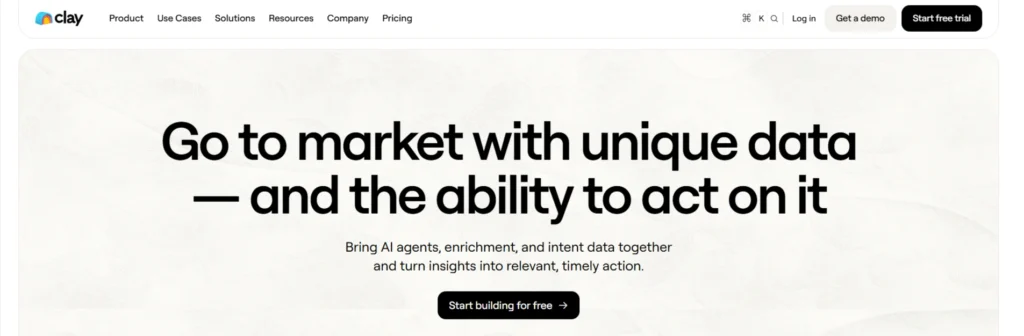
Clay is becoming popular because it sits between enrichment, automation, and workflow building.
Instead of manually researching companies and contacts, teams can enrich records automatically and create more context inside HubSpot.
Where it becomes valuable:
- B2B.
- Outbound.
- Account-based workflows.
- Market expansion.
The biggest benefit is usually not speed.
It is better prioritization.
2. Apollo.io

Apollo helps marketing and sales teams reduce the distance between identifying prospects and acting on them.
Its strongest use cases often involve:
- lead sourcing
- contact intelligence
- workflow activation
Teams that integrate Apollo well often reduce spreadsheet dependence dramatically.
3. ZoomInfo
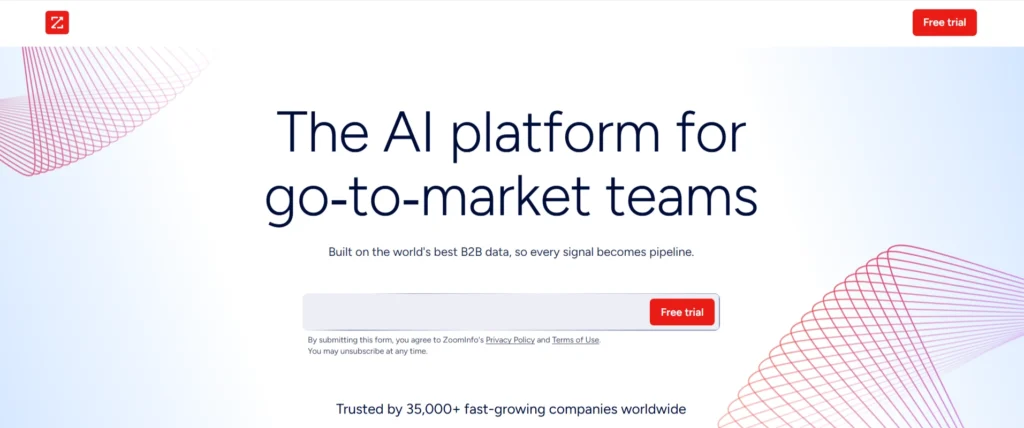
ZoomInfo enters the conversation when enrichment becomes more operational.
Larger organizations often use it to strengthen account visibility and reduce uncertainty before outreach.
This is usually less about getting more leads.
And more about understanding existing opportunities better.
4. Clearbit
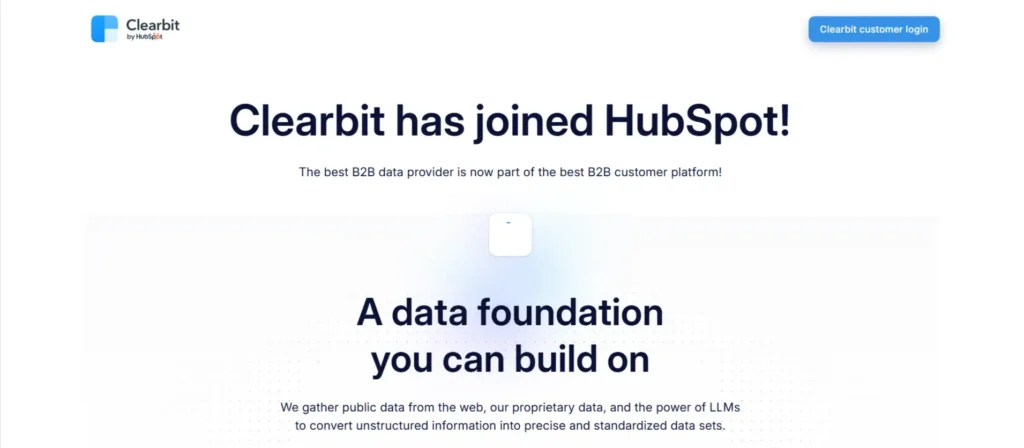
Clearbit has historically been useful for turning anonymous interactions into more usable customer intelligence.
Its value often appears earlier in:
- journeys
- Forms
- Website visits
- Lead routing
- Context
The strongest implementations make teams feel like fewer things fall through the cracks.
Turning Customer Data Into Content That Actually Moves Buyers
One of the strangest things that happens inside many marketing teams is this:
- They finally centralize customer data.
- They finally implement a CRM.
- They finally build reporting.
- And then content continues operating almost independently.
The CRM knows what prospects care about.
Sales hears objections every day.
Customer conversations reveal language.
Yet content gets created based on assumptions.
This is where HubSpot integrations become more interesting.
Not because AI writes content alone, but because how AI is changing content marketing is forcing teams to rethink workflows.
But because content becomes connected to customer signals.
The strongest content systems today are not publishing systems.
They are feedback systems.
Content & SEO Integrations: Turning CRM Intelligence Into Content
Content becomes more effective when it responds to demand instead of guessing.
These integrations help close that loop.
5. Jasper AI
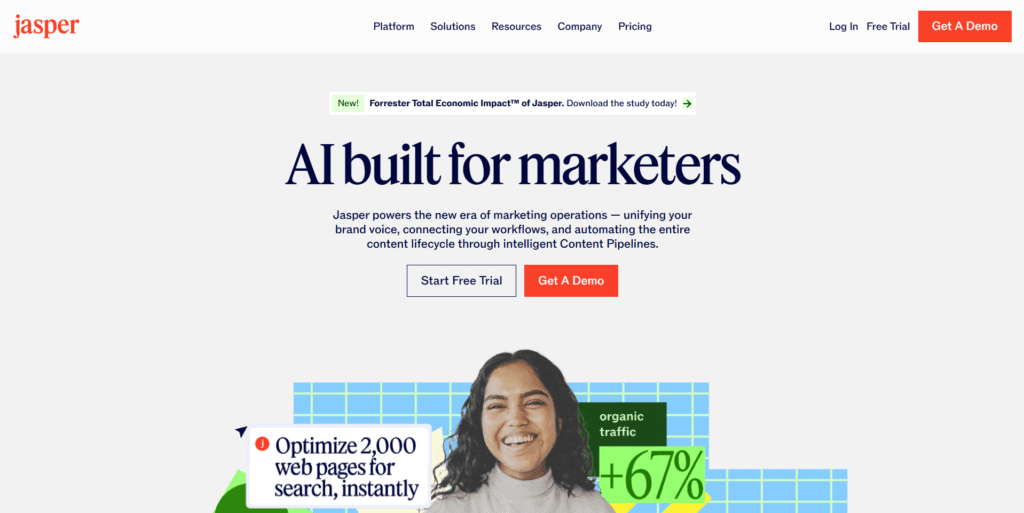
Most discussions around AI writing focus on speed.
That is usually the least interesting part.
The stronger use case inside a HubSpot environment is consistency.
Marketing teams often struggle with questions like:
- How do we maintain messaging across campaigns?
- How do we scale content production without sounding fragmented?
- How do we preserve positioning while producing more?
This is where Jasper becomes useful.
When integrated thoughtfully, teams can use CRM signals, campaign objectives, and existing messaging to support content creation rather than starting from blank pages repeatedly.
Where this tends to work best:
- email creation
- campaign messaging
- nurture sequences
- content repurposing
- landing page workflows
Where it usually underperforms:
- Trying to replace strategy.
AI can accelerate execution, especially when teams focus on automating content creation and optimization across campaigns.
It does not replace understanding.
6. Surfer SEO
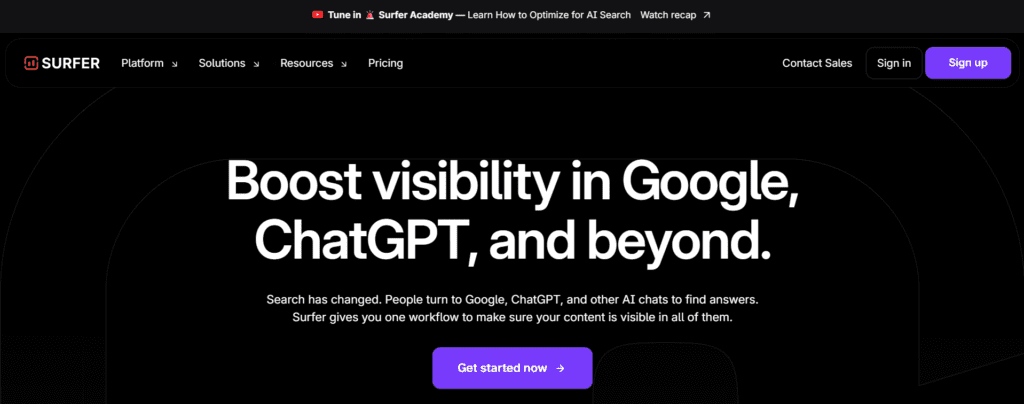
Many companies still treat SEO and CRM as separate worlds.
Traffic lives in one place.
Leads live somewhere else.
That separation creates waste.
Surfer becomes more interesting when content planning begins connecting to actual business outcomes.
Instead of creating content only around volume, teams start asking:
- Which topics influence opportunities?
- Which content supports sales?
- Which pages create better customers?
That shift usually improves content quality more than optimization scores.
Surfer works strongest when teams already understand who they want to attract.
7. Writer

As teams scale, content quality becomes an operational problem.
Different writers.
Different channels.
Different campaigns.
Different interpretations of the brand.
Writers tend to become valuable when organizations want stronger governance across messaging.
Less: Can AI generate faster?
More: Can teams stay aligned?
That distinction becomes more important as marketing operations mature.
Automation: The Category That Usually Creates the Biggest Immediate ROI
Automation has a reputation problem.
People imagine complicated workflows.
Endless diagrams.
Engineering-heavy implementation.
But the strongest automation systems often feel invisible.
Someone fills a form.
Records update.
Tasks appear.
Notifications trigger.
Nobody thinks about the process.
Things simply move.
That is usually the goal.
Not complexity.
Reduced coordination.
8. Zapier
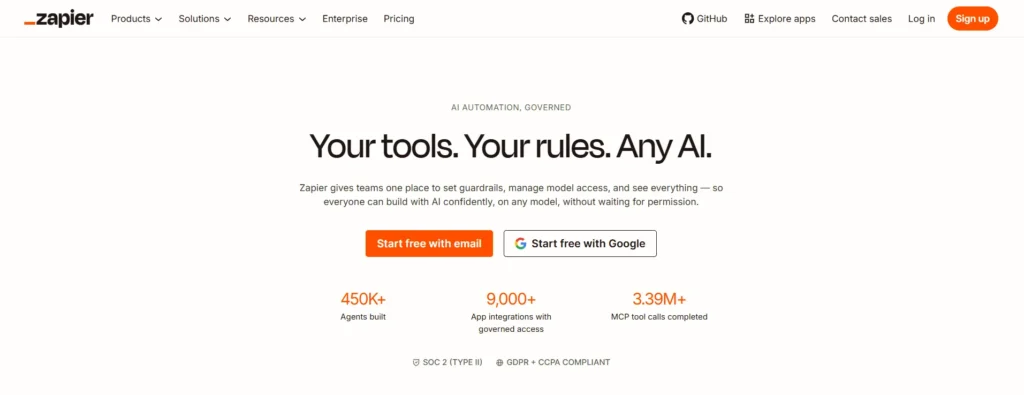
Zapier became popular because it removed a common bottleneck.
Teams wanted software to talk to each other without waiting for development.
That remains its biggest strength.
Inside HubSpot ecosystems, Zapier often becomes connective tissue.
Examples:
- A form creates a CRM record.
- CRM updates trigger notifications.
- Opportunities create onboarding tasks.
- Campaign actions trigger reporting updates.
What matters is not the number of automations.
It is removing repetitive work.
One useful warning:
Teams often automate broken processes.
That creates faster confusion.
Clean the workflow first.
Then automate.
9. Make
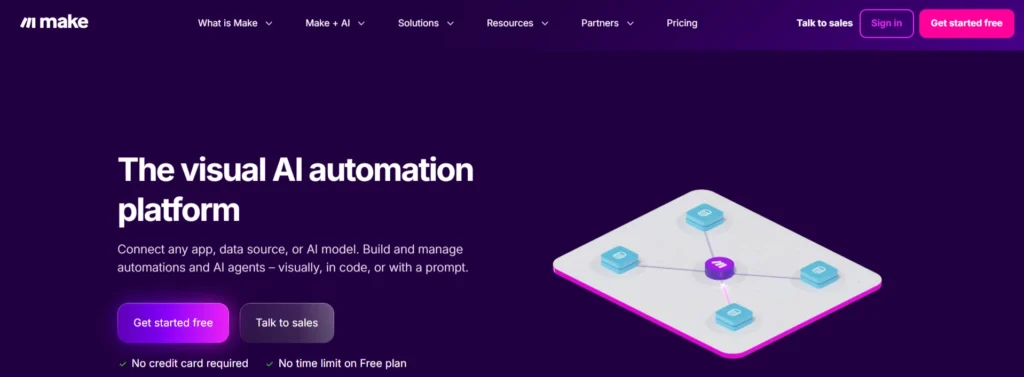
Make attracts teams that want more flexibility and visibility into workflow design.
Compared with simpler automation tools, Make often appeals to operations-heavy environments.
What it enables is not necessarily more automation.
It enables more thoughtful orchestration.
That difference matters.
Because scaling usually introduces exceptions.
And exceptions break rigid systems.
Communication: Where Conversion Actually Happens
Many marketing stacks become obsessed with generating activity.
Leads.
Traffic.
Meetings.
But eventually growth becomes conversation.
That is where communication tools start affecting outcomes.
10. Aircall
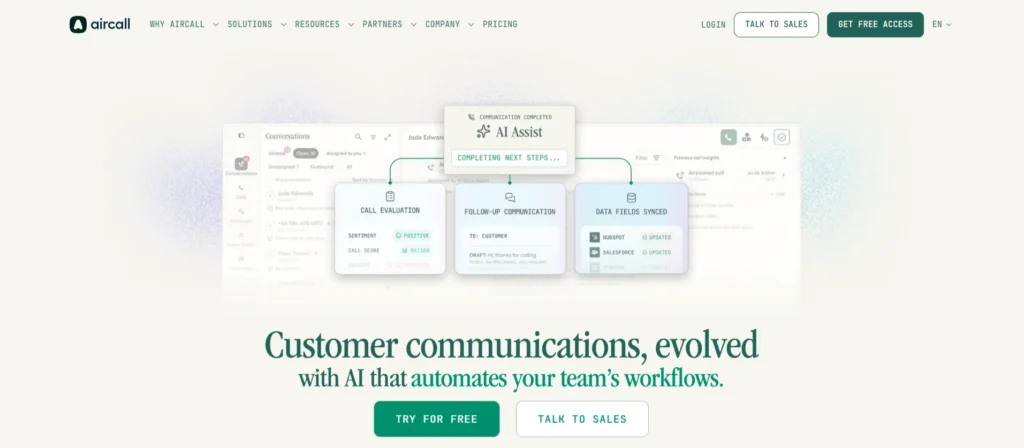
Aircall helps reduce the distance between customer interaction and CRM visibility.
Calls become context.
Conversations become data.
Teams stop relying on memory.
Its strongest implementations usually appear where sales and marketing operate closely together.
Because context compounds.
11. Zoom

Video platforms seem obvious until organizations start connecting meeting behavior to customer journeys.
Scheduling.
Attendance.
Follow-up.
Opportunity movement.
Meeting infrastructure becomes more valuable once interactions become measurable.
Customer Experience: Reducing Friction Before Customers Ask For Help
Customer experience tools often get grouped under support.
But support usually arrives too late.
The stronger question is:
What uncertainty could have been prevented?
12. Intercom
Intercom works best when businesses want conversations to become part of growth rather than separate from it.
The strongest implementations reduce waiting.
Customers feel guided.
Not escalated.
13. Drift

Drift helped popularize conversational qualification.
Instead of forcing every visitor through static forms, businesses can route intent dynamically.
The strongest results usually come from reducing unnecessary steps.
Not adding more interactions.
Analytics: Because More Activity Does Not Always Mean More Growth
There is a point in almost every growing marketing team where reporting starts becoming uncomfortable.
Campaigns are running.
Leads are entering.
Dashboards look active.
But simple questions become difficult to answer.
- Generate Demand
This is usually where teams realise they do not need more reports.
They need better interpretation.
HubSpot gives strong visibility into the customer journey, but many teams eventually extend reporting to create broader operational visibility.
The goal is not collecting more numbers.
It is making decisions with more confidence.
14. Looker Studio
One of the biggest problems with reporting is fragmentation.
Traffic sits somewhere.
CRM data sits somewhere else.
Advertising performance exists in another dashboard.
Looker Studio becomes valuable because it helps teams create a single narrative rather than reading disconnected metrics.
The strongest implementations usually answer questions like:
- How did traffic become pipeline?
- How did campaigns become opportunities?
- Where are customers dropping?
When reporting becomes easier to understand, decision-making speeds up.
That is usually the real ROI.
15. Databox

Databox tends to appeal to teams that want operational visibility without building reporting infrastructure internally.
Its biggest advantage is often alignment.
Executives.
Marketing.
Sales.
Operations.
Everyone starts discussing the same version of performance.
That matters more than most teams realise.
Because bad reporting rarely creates bad numbers.
It creates competing interpretations.
Recommended HubSpot Stacks Based on Business Stage
One of the easiest mistakes companies make is copying enterprise stacks before they need them.
Better software does not automatically create better operations.
Usually, simpler systems executed well outperform sophisticated systems executed poorly.
These are the stack combinations we would realistically recommend.
Lean Growth Stack (Early Stage)
Best for: Small teams building repeatability.
Stack:
- HubSpot
- Zapier
- Jasper
- Looker Studio
Why this works: This combination keeps complexity low while creating visibility and execution support.
You generate demand.
Track outcomes.
Automate repetitive work.
Without creating operational overhead.
Growth Marketing Stack (Scaling Teams)
Best for: Companies investing seriously in lead generation.
Stack:
- HubSpot
- Clay
- Surfer
- Aircall
- Databox
- Zapier
Why this works: This stack improves the quality of demand rather than simply increasing activity.
Better inputs.
Better prioritization.
Better reporting.
Revenue Operations Stack (Mature Organizations)
Best for: Cross-functional growth teams.
Stack:
- HubSpot
- ZoomInfo
- Writer
- Make
- Intercom
- Databox
Why this works: At this stage, operational consistency matters more than adding channels.
Agency Stack (Closest to How Many Modern Agencies Operate)
Best for: Marketing agencies and service businesses.
Stack:
- HubSpot
- Clay
- Jasper
- Surfer
- Make
- Looker Studio
Why this works: It balances execution, reporting, content, and operations.
Without becoming difficult to maintain.
Integrations We Would Delay Until There Is a Clear Need
Not every integration deserves implementation.
This section matters because software decisions create long-term operational cost.
We would usually delay:
Multiple enrichment platforms
One strong source is often enough.
Advanced automation before process clarity
Broken workflows become faster broken workflows.
Enterprise reporting too early
Most teams underuse analytics infrastructure before fully evaluating top AI analytics automation tools for business.
AI content systems before messaging maturity
Scale magnifies inconsistency.
Multiple communication platforms
Conversation fragmentation creates confusion.
A useful rule: If removing the integration tomorrow changes nothing operationally, it probably was not needed.
Final Thoughts: Great Marketing Teams Rarely Win Because They Own More Software
Software buying is easy.
Building systems is difficult.
Most growth bottlenecks are not caused by missing platforms.
They happen because:
- Information moves slowly.
- Teams work separately.
- Insights stay trapped.
- Customers experience disconnected journeys.
HubSpot becomes powerful when it stops acting like software and starts acting like infrastructure.
That is where integrations become useful.
Not because they increase capability.
Because they reduce friction.
If there is one idea worth carrying forward from this guide, it is this:
Do not ask: What should we connect to HubSpot?
Ask: What decision still feels unnecessarily manual?
The answer usually tells you which integration deserves to exist.
Frequently Asked Questions
What is the best AI integration for HubSpot?
There is no universal answer. Lead enrichment, content AI, and automation tools all solve different bottlenecks.
Does HubSpot already include AI?
Yes, HubSpot increasingly includes AI capabilities. But many organizations still extend it using specialized tools depending on workflow maturity and operational needs.
Is HubSpot enough by itself?
For many small and growing businesses, HubSpot can handle core marketing and sales needs. As operations become more complex, AI integrations can help automate repetitive tasks and improve efficiency.
Which HubSpot integrations provide the fastest ROI?
AI tools for lead enrichment, workflow automation, and reporting often provide the quickest return on investment because they reduce manual work and speed up decision-making.
Should small businesses use all these integrations?
Not necessarily. It’s usually better to start with one or two AI tools that solve the biggest business challenges and add more integrations as your needs grow.