
Real AI Workflows Healthcare Practices Use in 2026
Most conversations around AI in healthcare marketing are filled with futuristic predictions:
- “AI doctors.”
- “Fully automated clinics.”
- “Robots replacing staff.”
But that is not what most healthcare businesses are actually using today. The real impact of AI in healthcare marketing is much more practical, and honestly, much more useful.
The clinics benefiting most from AI right now are not necessarily using complicated systems. They are using AI to:
- Save time
- Improve consistency
- Increase visibility
- Strengthen patient communication
- Remove operational friction
The goal is neither to replace healthcare professionals nor to replace human trust. It is simply to improve workflows. That is the real story of AI in healthcare marketing in 2026.
Most Clinics Are Already Using AI Without Realizing It
Many healthcare practices assume AI only means tools like ChatGPT. But AI is already quietly powering:
- Google search and Maps rankings
- Review systems and sentiment analysis
- Ad optimization and bidding algorithms
- Appointment workflows and scheduling tools
- Spam filtering
- CRM systems and patient communication
The real shift is not: “Should clinics use AI?”
The shift is: “How intelligently are clinics using it?”
Some healthcare providers are now creating major operational and marketing advantages through practical AI workflows.
AI Is Not Replacing Healthcare Marketing Teams
This is important: clinics that succeed with AI usually aren’t eliminating people. They are improving speed, efficiency, responsiveness, and consistency.
AI works best in healthcare marketing when paired with:
- Human oversight
- Physician expertise
- Patient understanding
- Operational strategy
The strongest systems today are human-guided AI systems, not fully automated shortcuts.
Workflow #1: AI-Assisted Healthcare Content Creation

This is probably the most common AI workflow that clinics use now. But the good clinics are not simply mass-producing blogs. The smarter workflow usually looks like this:
- Step 1: Identify real patient search intent. Target questions patients actually ask, such as:
- “What causes chronic migraines?”
- “Is an epidural injection painful?”
- “When should I see a pain specialist?”
- Step 2: Use AI to structure drafts faster. Modern AI SEO tools help organize topics, structure FAQs, summarize concepts, and accelerate content production.
- Step 3: Human expertise refines the content. This is the critical part. Strong healthcare content still requires physician review, medical nuance, trust signals, patient clarity, and rigorous Google E-E-A-T alignment.
The clinics winning with AI are not publishing robotic content. They are leveraging specialized AI SEO services to improve workflow efficiency while preserving expertise.
Workflow #2: AI for FAQ Architecture
AI is extremely useful for identifying repetitive patient questions, conversational search patterns, and symptom-based queries.
Clinics now use AI to help generate:
- FAQ structures
- Treatment question clusters
- Conversational content pathways
This helps improve SEO, AI Overview visibility, patient clarity, and trust. Understanding how AI is changing healthcare search reveals why this matters: patients increasingly search conversationally rather than using rigid keywords.
Workflow #3: AI Chat for Frontline Communication
Many clinics now use AI-assisted chat systems for:
- Appointment guidance
- Insurance questions
- Office hours
- Treatment inquiries
- Basic qualification
- After-hours communication
This is especially useful because practices frequently lose inquiries due to slow follow-up. In fact, unresponsive communication is a primary reason most clinic websites lose patients before the call. AI chat systems help clinics respond faster, more consistently, and outside office hours.
Crucially, these systems must be configured to comply with patient privacy rules like HIPAA, ensuring that sensitive personal health information is never improperly stored or exposed.
The key difference? The best clinics use AI chat as support, not replacement. Patients should still feel they are interacting with a real healthcare business.
Workflow #4: AI Review Response Assistance
Reviews have become one of the biggest trust signals in healthcare online. But responding manually to every review becomes time-consuming.
Many clinics now use AI-assisted systems to draft review responses, maintain tone consistency, and save staff time.
However, smart clinics still review responses manually before publishing. Healthcare communication still requires empathy, professionalism, contextual awareness, and strict adherence to privacy laws (never confirming that a reviewer is a patient or disclosing treatment details); avoiding the common Google Business Profile mistakes clinics make.
Workflow #5: AI-Powered Google Ads Optimization
Many healthcare clinics now use AI-assisted ad systems for:
- Keyword expansion
- Ad variation testing
- Audience insights
- Bid optimization
- Search intent analysis
Google itself heavily uses AI inside advertising systems now. But the important part is this: AI improves ad optimization; it does not automatically create strategy.
Clinics still need clear positioning, high-converting design, local relevance, and trust systems. Knowing what makes a healthcare website actually convert patients is critical; otherwise, AI simply optimizes traffic to weak landing pages faster.
Workflow #6: AI for Patient Follow-Up Systems
Clinics increasingly use AI-assisted workflows for:
- Appointment reminders
- Follow-up emails
- Reactivation campaigns
- Wellness reminders
- Patient nurturing
- Review requests
Implementing targeted healthcare automation systems that save clinics time improves retention, consistency, and operational efficiency, especially for:
- Therapy clinics
- Med spas
- Chiropractors
- Pain management
- Cosmetic practices
- Long-term treatment plans
Workflow #7: AI-Assisted Local SEO Workflows
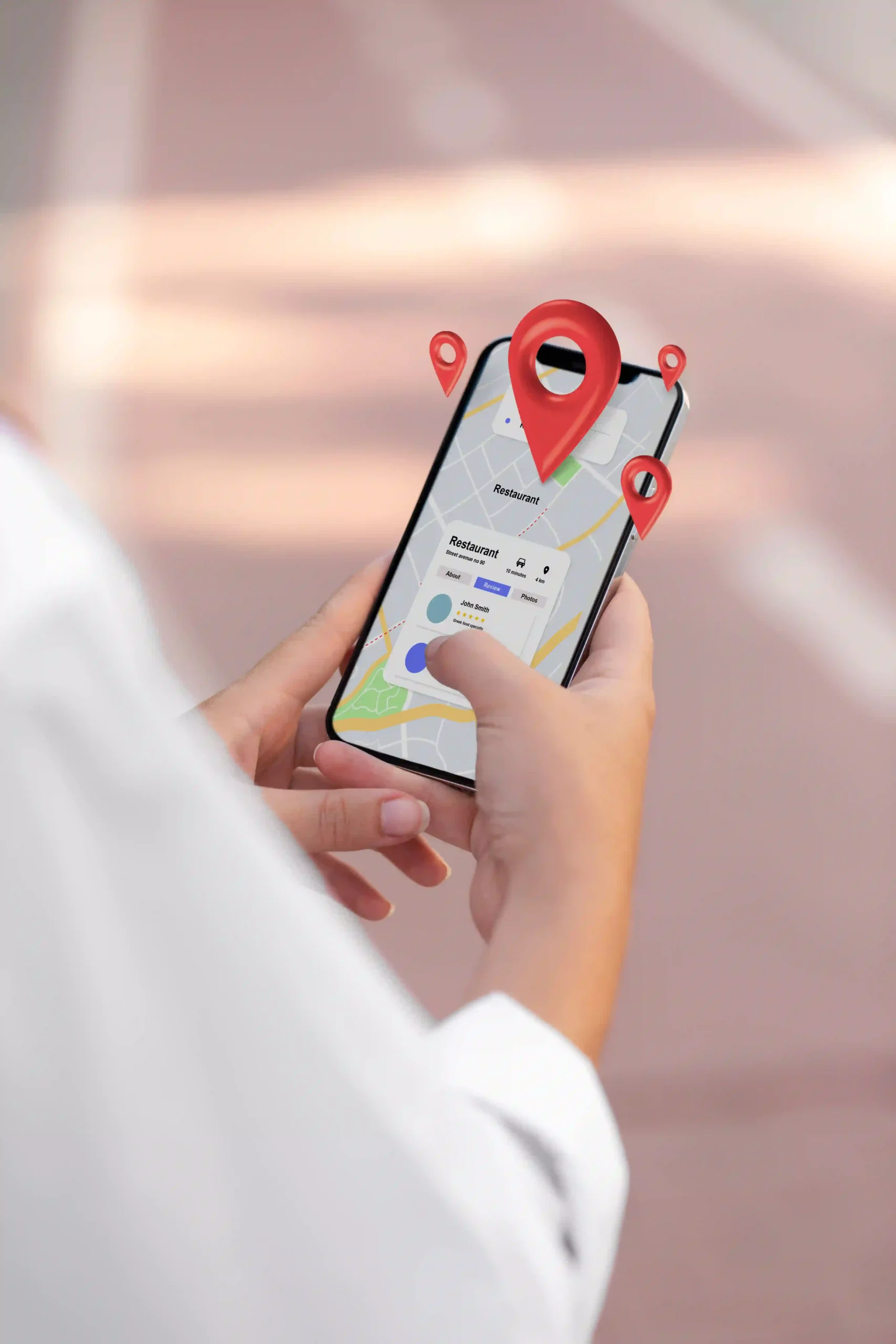
Healthcare local SEO now involves massive operational complexity. AI helps clinics streamline:
- Local page structuring
- FAQ generation
- Schema markup generation
- Review analysis
- Local keyword grouping
- Google Business Profile optimization workflows
AI speeds up execution, but it does not replace hands-on local strategy. Pairing automation with proven healthcare SEO services and dedicated Google My Business optimization services is crucial for dominating high-intent, localized patient queries.
Workflow #8: AI for Internal Marketing Operations
One of the most practical uses of AI is internal efficiency. Healthcare marketing teams now use AI to:
- Summarize meetings
- Organize workflows
- Draft reports
- Structure campaigns
- Create SOPs
- Organize patient communication systems
- Build content calendars
This operational layer saves a massive amount of administrative time, particularly for organizations managing local SEO for multi-location clinics.
What Clinics Are NOT Really Using AI For
This is where marketing hype becomes misleading. Most real clinics are not:
- Replacing physicians with AI
- Fully automating healthcare decisions
- Running fully autonomous marketing systems
The practical reality is much more grounded. AI is mainly helping clinics move faster, communicate better, and operate more efficiently. That is where the actual ROI exists right now.
The Bergen County Example

Imagine two multi-location clinics in Bergen County:
- Clinic A relies on manual content systems, delayed responses, inconsistent follow-ups, weak review handling, and slow operational workflows.
- Clinic B utilizes AI-assisted content workflows, AI-supported patient chat, automated review requests, AI-assisted CRM systems, and faster internal marketing operations.
Clinic B usually responds faster, publishes more consistently, improves patient communication, and operates more efficiently. Not because AI “replaced staff,” but because AI reduced operational friction.
The Biggest AI Mistake Clinics Make
The biggest mistake healthcare businesses make is using AI without strategy. That creates:
- Generic content
- Robotic communication
- Weak trust
- Inconsistent patient experiences
- Potential compliance and privacy risks
This lack of strategic execution is a central reason most healthcare SEO efforts fail. Healthcare marketing still requires empathy, expertise, physician authority, and human judgment. AI works best when it supports those systems, not replaces them.
AI Is Making Trust More Important, Not Less
Ironically, AI is increasing the importance of trust in healthcare marketing. As more generic content floods the internet, patients increasingly value real expertise, physician visibility, educational depth, and authentic credibility.
The clinics winning with AI are usually the ones combining automation, operational efficiency, and a modern healthcare marketing system. That combination is powerful.
What Smart Clinics Are Actually Prioritizing
| Priority Area | Key Impact |
| Faster patient communication | Reduces lead delays and lost inquiries. |
| Operational efficiency | Saves administrative and staff time. |
| Content acceleration | Improves publishing consistency without sacrificing depth. |
| Better FAQ systems | Supports conversational search and AI Overviews. |
| Review management | Strengthens trust, social proof, and local SEO. |
| CRM automation | Improves follow-up and reactivation consistency. |
| Internal workflow organization | Reduces operational bottlenecks and chaos. |
| Human oversight & compliance | Protects patient trust, credibility, and privacy. |
Final Thoughts
AI in healthcare marketing is not about futuristic fantasy. It is about practical systems that save time, improve consistency, strengthen communication, and reduce operational friction.
The clinics benefiting most from AI today are not the ones chasing hype. They are the ones quietly building smarter workflows, better patient experiences, stronger trust systems, and more efficient operations.
In healthcare, technology alone does not create growth; trust still does. AI simply helps clinics build and manage that trust more efficiently. If you’re ready to integrate intelligent workflows into your practice, contact us to see how a structured digital strategy can scale your patient acquisition.
FAQs
How are clinics actually using AI in healthcare marketing?
Clinics use AI for content workflows, FAQ generation, review responses, CRM automation, patient follow-ups, AI chat systems, Google Ads optimization, and operational efficiency.
Is AI replacing healthcare marketing teams?
No. Most successful healthcare practices use AI to support human teams by improving efficiency, consistency, and communication rather than replacing staff.
Can AI help healthcare SEO?
Yes. AI helps streamline content creation, FAQ architecture, local SEO workflows, and conversational search optimization when combined with human expertise and EEAT principles.
How do clinics use AI chat systems?
AI chat systems help answer common patient questions, support appointment workflows, and improve response times, especially after hours.
Is AI-generated healthcare content safe?
Healthcare content still requires physician oversight, factual accuracy, nuance, and trust signals. AI works best as an assistant rather than a fully autonomous content creator.
What is the biggest mistake clinics make with AI?
The biggest mistake is using AI without strategy or human oversight, leading to generic content, robotic communication, and weak trust signals.