

Most e-commerce brands think product reviews are about trust.
That is only partially true.
Reviews influence much more than credibility today.
They shape:
- buying confidence
- product discovery
- conversion psychology
- customer expectations
- retention
- ad performance
- search visibility
- operational learning
And increasingly, reviews are becoming one of the most important forms of customer intelligence inside modern ecommerce systems.
This is one of the biggest shifts happening inside Shopify ecosystems right now.
Reviews are no longer static testimonial sections sitting quietly beneath product pages.
They are operational infrastructure.
The strongest ecommerce brands now use review systems to understand:
- how customers describe products
- what objections repeatedly appear
- which visuals increase confidence
- what messaging converts better
- where hesitation happens before purchase
That is why platforms like Judge.me, Loox, Yotpo, Stamped.io, and Okendo continue becoming strategically important for Shopify brands.
Not because ecommerce suddenly discovered reviews matter.
Because customer trust now develops operationally across the entire buying journey.
This guide is not another “best Shopify review apps” list.
It is a breakdown of how modern review systems actually influence ecommerce conversion and where different review platforms fit operationally.
Because the important question is no longer:
“Which review app has the most features?”
It is:
“How does customer trust move someone closer to purchase?”
Product Reviews Became More Important As Ecommerce Became More Competitive
When ecommerce was simpler, reviews mainly acted as reassurance.
Customers checked ratings quickly.
Then purchased.
But customer behaviour changed dramatically over the last few years.
People now:
- compare brands more aggressively
- research longer
- expect visual proof
- look for customer-generated content
- validate quality socially before purchasing
That changes the role of reviews entirely.
Reviews increasingly behave like:
- trust systems
- conversion systems
- research systems
- content systems
- customer-language systems
Especially for Shopify brands, where acquisition costs continue rising, reviews now influence much more than conversion rates alone.
They influence acquisition efficiency itself.
Because stronger trust reduces hesitation across the entire customer journey.
The strongest ecommerce operators increasingly treat review systems like revenue infrastructure within larger ecommerce tech stacks for Shopify brands.
What Ecommerce Teams Actually Struggle With
If you spend enough time reading DTC operator discussions, ecommerce agency breakdowns, and founder conversations, the frustrations become remarkably consistent.
Not because everyone uses identical platforms.
Because customer hesitation repeats operationally.
One recurring issue is a lack of believable trust signals.
Brands show polished photography.
Professional branding.
Perfect product descriptions.
But customers still want:
- real usage
- real outcomes
- real proof
Another common frustration is review inconsistency.
Many stores collect reviews passively instead of operationally building review systems.
As a result:
- review volume stays low
- customer visuals remain limited
- objections remain unanswered
- product confidence stays weak
There is also increasing operational frustration around content reuse.
Customers create valuable content constantly.
Photos.
Videos.
Use cases.
Testimonials.
But many brands fail to operationalize this content beyond product pages.
And perhaps the biggest issue: Many stores still treat reviews as widgets instead of conversion systems.
The strongest ecommerce brands build review ecosystems that influence:
- landing pages
- ads
- retention
- customer education
- upsells
- product positioning
That operational integration changes performance dramatically.
The Five Layers of a Modern Ecommerce Review System
Before selecting review software, define the operational layer.
Most mature Shopify review systems operate across five functions.
Trust
Where hesitation decreases.
Visual Proof
Where customers validate real-world usage.
Customer Intelligence
Where brands understand buyer language.
Conversion Support
Where objections get resolved.
Content Reuse
Where reviews become marketing assets.
Different platforms support different operational strengths.
The strongest brands choose review systems based on how customers buy within their category.
Trust Infrastructure: Why Simplicity Still Wins for Many Shopify Brands
One of the biggest misconceptions in ecommerce is that review systems need to feel technologically advanced.
Most customers simply want:
- clarity
- consistency
- believability
That is why straightforward review systems often outperform over-engineered implementations.
1. Judge.me
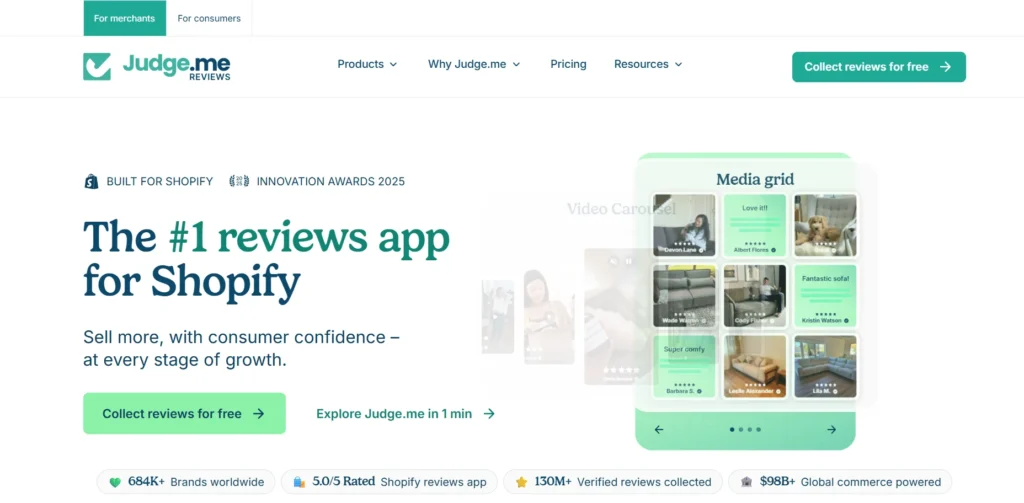
Judge.me became popular partly because it reduced friction around collecting and displaying reviews operationally.
That simplicity matters more than many brands initially realise.
The strongest review systems are usually the ones customers actually interact with consistently.
Where Judge.me tends to perform especially well:
- growing Shopify brands
- stores prioritizing simplicity
- retention-focused ecommerce
- review-heavy categories
Its biggest operational advantage is balance.
Brands can build strong review infrastructure without creating excessive operational overhead.
Another important operational benefit:
- review collection becomes repeatable.
That consistency compounds over time.
Visual Reviews: Why User-Generated Content Became Conversion Infrastructure
Customer behaviour changed significantly once e-commerce became visually saturated.
Polished product photography stopped being enough.
Customers increasingly want:
- real people
- real environments
- real usage
That shift made photo and video reviews dramatically more influential operationally.
2. Loox

Loox became increasingly valuable because visually driven ecommerce categories rely heavily on customer proof.
Fashion.
Beauty.
Home products.
Lifestyle brands.
Customers want to imagine products in real-world environments before purchasing.
The strongest Loox implementations usually influence more than product pages.
Review visuals increasingly get reused across:
- Meta ads
- landing pages
- retention email
- social content
- PDP optimization
The operational value is not simply social proof, which is why review platforms remain among the best Shopify apps for conversion growth.
Retention & Loyalty: Where Reviews Start Influencing Customer Lifecycle Systems
One of the biggest shifts inside ecommerce operations is that reviews increasingly connect with retention infrastructure.
The relationship no longer ends after purchase.
Modern review ecosystems influence:
- repeat purchases
- loyalty systems
- referrals
- post-purchase engagement
- lifecycle communication
3. Yotpo
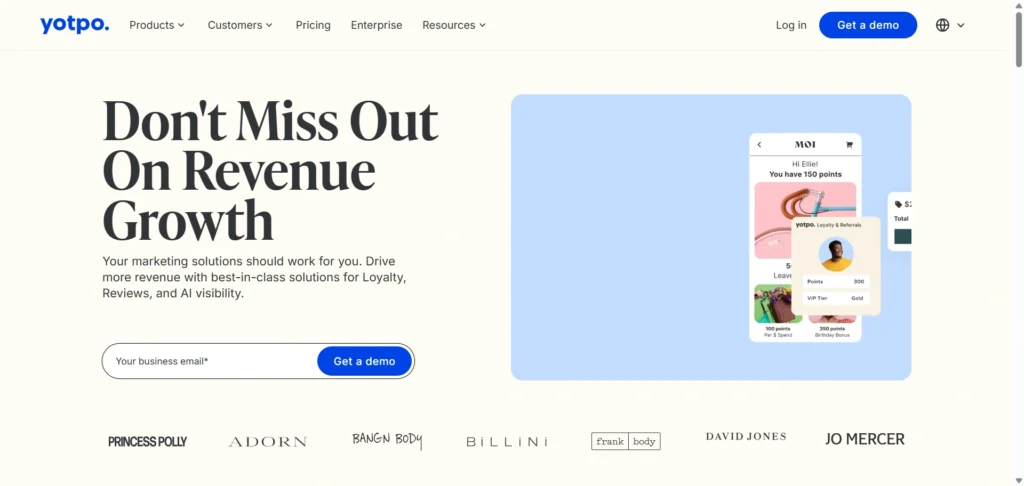
Yotpo became operationally important because it expanded beyond reviews into broader customer engagement systems.
Its strongest implementations often connect:
- reviews
- SMS
- loyalty
- retention
- customer advocacy
This matters because customer trust compounds more effectively when operational systems stay connected.
The strongest ecommerce brands increasingly avoid fragmented customer experiences.
Instead, they build unified post-purchase ecosystems.
Customer Intelligence: Why Reviews Became a Source of Market Research
Many ecommerce brands still underestimate how valuable customer review language actually is.
Reviews reveal:
- buying motivations
- objections
- emotional triggers
- unexpected use cases
- positioning opportunities
That information becomes strategically powerful for:
- ad copy
- SEO
- landing pages
- product positioning
4. Stamped.io

Stamped.io became increasingly useful for brands wanting stronger flexibility around customer-generated content and feedback systems.
Its operational value often comes from helping brands structure customer insight more effectively.
The strongest teams increasingly treat review systems like customer research infrastructure rather than purely reputation systems.
Related guide: AI stacks for Shopify brands
Experience-Led Ecommerce: Where Reviews Become Part of Brand Identity
Some ecommerce categories depend heavily on emotional reassurance before purchase.
Especially:
- skincare
- supplements
- luxury products
- parenting
- wellness
In these environments, reviews become part of the buying experience itself.
5. Okendo
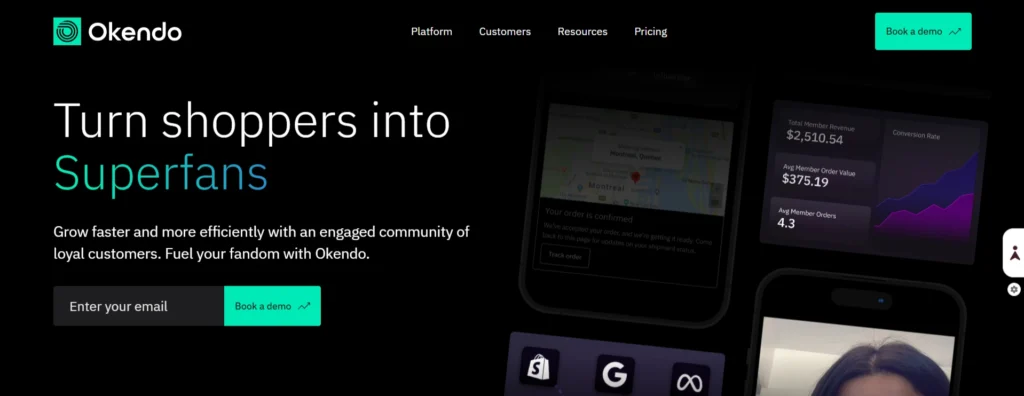
Okendo tends to perform especially well for brands prioritizing customer experience depth and stronger profile-based review systems.
Its strongest implementations often focus on:
- richer customer attributes
- contextual recommendations
- personalized trust experiences
- advanced customer segmentation
The operational shift is important.
Reviews stop behaving like static testimonials.
They become personalized buying guidance systems.