

Indian films have achieved major commercial success overseas before, but Ramayana: Part One presents an interesting marketing challenge: how do you introduce one of India’s most familiar stories to an international audience that may know very little about it?
Directed by Nitesh Tiwari and starring Ranbir Kapoor, Sai Pallavi and Yash, the film was released worldwide on November 5, 2026. Its promotional campaign extended beyond traditional film publicity, involving Sony Pictures’ international distribution network, CinemaCon in Las Vegas, San Diego Comic-Con, international creator exposure and multilingual distribution.
The campaign was not simply about getting an Indian film into overseas cinemas. It was also about positioning a culturally specific story within the international fantasy and adventure market.
Early box-office reports indicate substantial overseas revenue, while audience ratings show strong initial satisfaction among participating viewers.
But these results raise a bigger question: Did Ramayana’s marketing strategy successfully introduce the film to new international audiences, or did it primarily strengthen demand among people already interested in Indian cinema?
Let’s examine the campaigns, marketing decisions, audience response and lessons that businesses can take from its international release.
What Was Ramayana’s Marketing Strategy?
Ramayana’s marketing strategy combined large-scale film publicity with international distribution, entertainment-industry events, influencer exposure, multilingual content and brand collaborations.
Rather than depending exclusively on the popularity of its actors or the cultural significance of its story, the campaign promoted the film as a large-scale cinematic production intended for international audiences.
Here is an overview of its major promotional activities.
| Campaign activity | Channel | Marketing objective |
| Rama character reveal | Digital publicity and entertainment media | Build early awareness and anticipation |
| CinemaCon 2026, Las Vegas | Film-industry event | Reach exhibitors, distributors and international media |
| San Diego Comic-Con 2026 | Fan and entertainment event | Introduce the film to fantasy and adventure audiences |
| Sony Pictures distribution partnership | International theatrical distribution | Expand availability across overseas markets |
| MrBeast promotional appearance | Influencer and celebrity publicity | Generate interest across digital audiences |
| Multilingual trailers and film versions | Content localisation | Reduce language barriers |
| IMAX and international production positioning | Premium brand marketing | Communicate production scale and cinematic quality |
| Brand collaborations and merchandise | Partnership marketing | Extend visibility and create additional consumer touchpoints |
These activities addressed different stages of the marketing process, from awareness and credibility to accessibility and theatrical availability.
However, the commercial effectiveness of each individual campaign cannot be established without campaign-specific spending, audience and attribution data.
1. CinemaCon 2026: Marketing to the International Film Industry
One of Ramayana’s major international promotional appearances took place at CinemaCon 2026 in Las Vegas.
Producer Namit Malhotra and actor Yash presented the project to an audience that included cinema exhibitors, distribution professionals and entertainment-industry representatives.
The presentation highlighted the film’s production scale, international ambitions and visual storytelling.
This was a different form of marketing from promoting a trailer to ordinary moviegoers.
CinemaCon primarily serves the theatrical exhibition industry. Consequently, the event offered an opportunity to generate interest among businesses responsible for screening and distributing films.
Why this marketing decision matters
A film needs more than consumer demand to achieve international commercial success.
It also needs distribution agreements, theatre availability, suitable screening formats and support from exhibitors.
In business marketing terms, this is comparable to a company promoting its product to distributors, retailers or channel partners before launching directly to customers.
Ramayana’s CinemaCon presence addressed an important part of the international distribution ecosystem.
Marketing lesson: Businesses expanding internationally should distinguish between marketing to customers and marketing to the partners who make reaching those customers possible.
A consumer product entering the US market might need retail partnerships, distribution arrangements and marketplace access alongside customer-facing advertising.
These are related activities, but they require different audiences and marketing messages.
2. San Diego Comic-Con: Introducing Ramayana to Fantasy Audiences
In July 2026, Ramayana was showcased at San Diego Comic-Con, with members of the film’s creative team and cast participating.
Comic-Con is an international event associated with fantasy, science fiction, comics, superhero films and established entertainment franchises.
For Ramayana, this offered a relevant opportunity.
The story contains elements already familiar to global fantasy audiences, including legendary kingdoms, extraordinary characters, moral conflict, battles and an expansive fictional world.
However, the cultural and narrative context is different from the Hollywood franchises many Comic-Con attendees already know.
The audience-targeting strategy
The potential advantage of Comic-Con was audience overlap.
Instead of attempting to reach every international moviegoer, the campaign could introduce the film to an existing community interested in large-scale fantasy storytelling.
This is a useful marketing principle.
When launching an unfamiliar product, businesses can begin by identifying customers whose existing interests align with the product’s characteristics.
For example, an Indian gaming company entering the US market might initially target communities interested in strategy games rather than promoting its game to all American consumers.
The company would still need to show why its product is worth trying, but the audience would already be interested in the broader category.
Did Comic-Con generate international demand?
The event provides documented evidence of international promotional activity.
It does not independently establish how many tickets were sold because of that activity.
A proper campaign evaluation would compare indicators such as:
- Search interest before and after the showcase.
- Trailer views from target countries.
- Media coverage generated by the event.
- Audience engagement with promotional content.
- Ticket purchases or advance bookings attributable to related campaigns.
Without these measurements, the event should be described as an international awareness initiative rather than proof of successful customer acquisition.
3. MrBeast and Global Influencer Marketing
Another notable promotional moment took place in September 2026 when American YouTuber Jimmy Donaldson, popularly known as MrBeast, appeared at a Ramayana promotional event in Mumbai.
The event brought together one of the world’s most recognisable online creators and a major Indian film production.
From a marketing perspective, the potential benefit was clear.
MrBeast’s audience extends beyond people who regularly follow Bollywood or Indian entertainment publications.
His involvement could therefore generate awareness among people who might not otherwise encounter the film’s promotional material.
Why global influencers can help brands enter new markets
Businesses often select influencers based on follower counts, engagement rates and audience demographics.
However, a more useful consideration is whether a creator can help a brand reach the audience it is trying to acquire.
An Indian brand already popular among Indian consumers may gain limited international expansion benefits from repeatedly collaborating with creators whose followers are primarily existing customers.
Working with creators followed by the intended new audience could provide broader exposure.
But reach does not automatically translate into commercial performance.
What would prove the campaign worked?
For Ramayana, useful measurements would include:
| Metric | What it reveals |
| Campaign reach by country | Whether the content reached intended international markets |
| Engagement from new audiences | Whether unfamiliar viewers interacted with the promotion |
| Branded-search growth | Whether more people began researching Ramayana |
| Trailer traffic attributable to the campaign | Whether awareness encouraged further exploration |
| Ticket purchases | Whether campaign exposure translated into commercial action |
The publicly available information confirms MrBeast’s promotional appearance, but does not establish its incremental impact on ticket sales.
Marketing lesson: Evaluate influencer campaigns by audience relevance and commercial contribution, not celebrity visibility alone.
4. Sony Pictures and International Distribution
One of the most consequential business decisions behind Ramayana’s global rollout was the partnership with Sony Pictures.
In July 2026, Prime Focus Studios announced that Sony Pictures would handle international distribution outside India.
Dharma Productions was announced as the distribution partner for Hindi-speaking markets in North India.
The Sony partnership strengthened the film’s ability to access overseas theatrical markets through an established international distribution company.
However, there is an important difference between distribution and marketing.
Distribution determines where and how audiences can access a product.
Marketing creates awareness, interest and reasons to purchase it.
A film may secure thousands of international screenings without attracting enough paying customers to make those screenings commercially efficient.
Why this matters for international businesses
Consider an Indian e-commerce company launching products in the UK.
Listing those products on a UK marketplace makes them available to consumers.
It does not guarantee that British customers will discover the listings, trust the seller or purchase the products.
The company still needs market-specific positioning, relevant search visibility, competitive pricing, customer reviews and an effective conversion experience.
Ramayana’s international rollout illustrates the same distinction.
International availability is a necessary part of expansion, but it is not the same as international market penetration.
5. Multilingual Marketing: Making an Indian Story Accessible Worldwide
Ramayana was released in Hindi, Tamil, Telugu, Kannada, Malayalam and English.
The inclusion of an English-language version was particularly relevant to its international ambitions.
Language can be a significant barrier when introducing culturally specific content to audiences unfamiliar with the original material.
However, translation and localisation solve different problems.
Translation makes content understandable in another language. Localisation adapts communication to the expectations and context of the intended audience.
A person unfamiliar with the Ramayana might understand the English dialogue but still lack prior knowledge of dharma, the significance of particular characters or the relationships central to the narrative.
This presents a challenge for storytelling and marketing.
How can a campaign communicate enough background to attract new viewers without overwhelming them with explanations?
The connection to international digital marketing
Businesses face similar challenges when adapting websites, advertising campaigns and product descriptions for new countries.
For example, translating an Indian software company’s website into German may improve accessibility.
However, German customers may have different expectations concerning pricing transparency, data protection, product documentation and customer support.
Likewise, keywords that perform well in India might not reflect how customers search in Germany.
Successful localisation therefore requires more than changing the language.
It involves understanding local customer expectations, search behaviour, cultural references and purchasing decisions.
6. Hollywood Talent, IMAX and Premium Brand Positioning
Ramayana’s marketing also highlighted its internationally recognised filmmaking talent.
The film features music by A.R. Rahman and Hans Zimmer, with visual effects associated with DNEG.
Its premium theatrical presentation, including IMAX, further supported the positioning of the production as a major cinematic event.
These details can operate as credibility signals.
An Indian viewer may already recognise Ranbir Kapoor, Sai Pallavi or Yash.
An international moviegoer unfamiliar with those actors may instead recognise Hans Zimmer or the visual scale associated with major international productions.
The campaign could therefore communicate production ambition through several different points of familiarity.
Marketing lesson: Build trust through recognisable evidence
Companies entering international markets face a similar credibility challenge.
A business may have an established reputation domestically but little recognition overseas.
Relevant customer testimonials, recognised partnerships, independently verifiable certifications, case studies and published results can help prospective customers assess its credibility.
The key is to use evidence that matters to the target audience.
A familiar brand name in one market may mean very little in another.
7. Brand Partnerships and Merchandise Extended the Campaign
Ramayana also attracted brand collaborations connected to the film’s cultural themes and release period.
For example, diya oil brand Mangalmai collaborated with the film on a Diwali-related promotional campaign involving digital activities, retail visibility and consumer engagement.
Accessories brand Cosa Nostraa also introduced an officially licensed merchandise collection inspired by the epic’s characters and symbolism.
These partnerships illustrate a different part of the marketing strategy.
They create additional opportunities for consumers to encounter a film outside trailers, television interviews and entertainment websites.
Brand collaborations can provide new marketing channels while allowing participating companies to associate themselves with a relevant cultural moment.
However, these examples were especially connected to the film’s Indian cultural relevance.
They should not be presented as evidence of successful international audience acquisition.
Marketing lesson: Brand partnerships work best when there is a meaningful connection between the audiences, products and cultural context involved.
8. Ramayana’s Box Office Collection: What Do the Numbers Tell Us?
By its fifth theatrical day, Ramayana had reportedly collected ₹663.90 crore worldwide, according to Sacnilk figures cited by NDTV and The Times of India on November 10, 2026.
The figures provide an early indication of the film’s commercial performance.
Ramayana’s first five days: India vs overseas
| Market | Reported gross collection | Worldwide contribution |
| India | ₹413.90 crore | 62.3% |
| Overseas | ₹250 crore | 37.7% |
| Worldwide | ₹663.90 crore | 100% |
Source: Sacnilk trade estimates reported by NDTV and The Times of India on November 10, 2026. Figures are provisional and may differ across box-office reporting services.
Nearly 38% of the reported worldwide box-office gross came from overseas markets during the first five days.
That represents a substantial international revenue contribution.
However, this percentage should not be interpreted as the proportion of non-Indian viewers watching the film.
Overseas revenue does not automatically prove mainstream international adoption
International box-office earnings may come from multiple audience groups:
- Indian expatriates.
- South Asian communities living overseas.
- Existing international followers of Indian cinema.
- Viewers discovering Indian cinema for the first time.
The available gross collection figures do not identify how revenue is distributed across these groups.
Consequently, the data establish that Ramayana generated significant overseas revenue.
They do not establish the size of its newly acquired international audience.
This distinction is particularly important when evaluating a global marketing strategy.
For an international business, strong sales in a new country might initially come from an existing community familiar with the brand.
That is commercially valuable, but it differs from acquiring customers who have never encountered the company before.
Can the marketing campaign be called profitable?
Not from box-office gross alone.
To calculate marketing profitability, analysts would need verified promotional expenditure, theatrical revenue-sharing arrangements, distribution costs and income attributable to marketing.
A large worldwide collection is not equivalent to producer revenue or marketing return on investment.
The same principle applies to digital marketing.
Revenue, customer acquisition cost and profitability must be evaluated separately.
9. How Did Audiences Respond to Ramayana Worldwide?
Early reviews and ratings provide another way to examine the film’s international performance.
As of November 11, 2026, Rotten Tomatoes reported:
| Audience measurement | Score | Sample |
| Verified audience score | 94% positive | 500+ verified ratings |
| Critics’ Tomatometer | 77% positive | 52 reviews |
Source: Rotten Tomatoes, checked November 11, 2026.
These figures indicate a strong positive response among participating verified audience raters, while professional critics have been more divided.
However, the scores represent different measurements.
Rotten Tomatoes’ audience score measures the proportion of qualifying verified audience ratings that are positive.
The critics’ score measures the proportion of professional reviews classified as positive.
The figures should not be treated as equivalent satisfaction surveys.
What have viewers praised and criticised?
Available critical and audience reviews frequently discuss the film’s visual scale, production design and performances.
Some critics have also raised concerns about pacing, character development and emotional storytelling.
This creates an interesting marketing question.
Does a film built around a culturally familiar story deliver the same experience to people who already know the narrative and people discovering it for the first time?
The available reviews suggest that familiarity can influence how the story is received.
But the public ratings do not provide a sufficiently detailed country-by-country demographic breakdown to establish the difference quantitatively.
What would better audience research reveal?
A stronger evaluation would examine:
- The percentage of overseas viewers who had previously watched Indian films.
- Audience satisfaction by country and language version.
- Differences between Hindi and English-language audiences.
- The most frequently mentioned positive and negative aspects of the film.
- Whether international viewers intended to watch the second instalment.
- How audience response changed after the initial release period.
For brands, the broader lesson is that commercial performance and customer satisfaction should be analysed together.
Sales indicate purchasing behaviour. Feedback provides insight into the customer experience.
Neither measurement explains the full picture on its own.
10. How AI Marketing Tools Could Help Analyse a Campaign Like Ramayana
Ramayana’s international rollout also illustrates the growing relevance of AI-assisted tools in audience research, localisation and marketing analysis.
Although there is no publicly verified evidence that the film’s marketing team used the following platforms, they provide useful examples of how marketers could investigate similar international campaigns.
Brandwatch: Analysing International Audience Sentiment
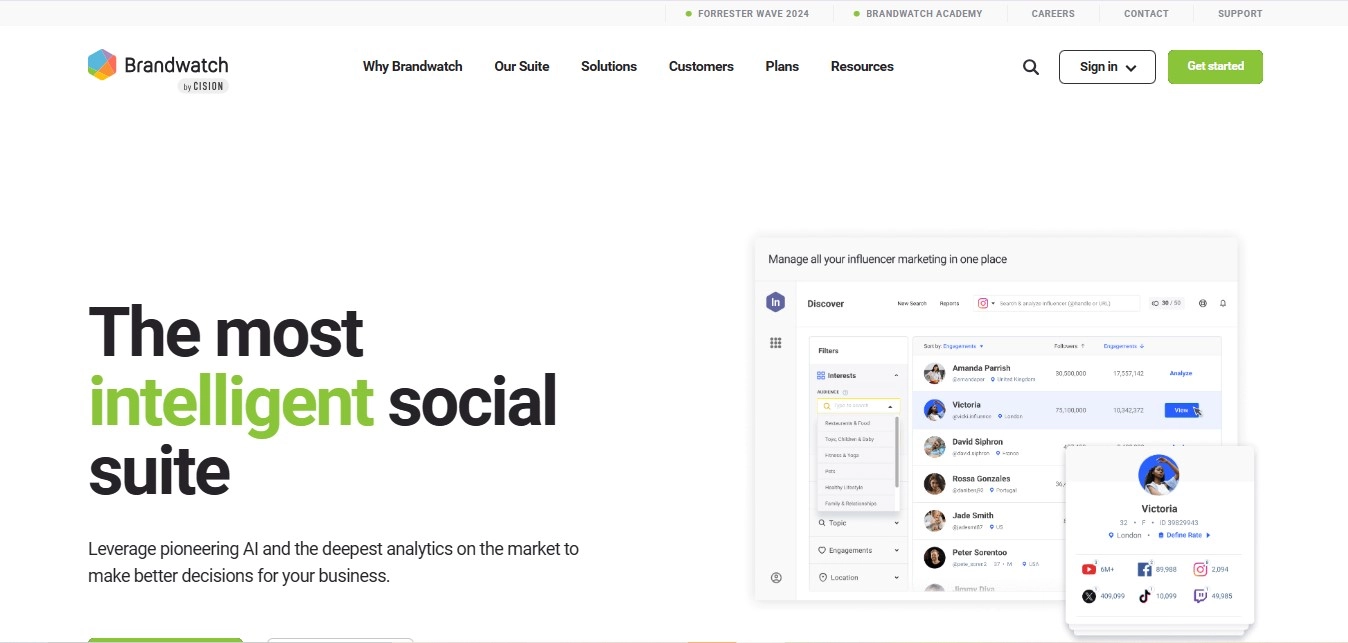
Brandwatch is a consumer intelligence and social listening platform that helps businesses understand online conversations and brand perception.
For a campaign like Ramayana, marketers could use social listening to investigate how discussions differ across markets.
For example, researchers might examine whether audiences in India focus on character portrayals and cultural authenticity, while other markets discuss fantasy elements, visual effects or storytelling.
Useful analysis could include sentiment trends, recurring topics, regional conversations and changes following promotional events.
However, sentiment analysis has limitations. Online discussions are not necessarily representative of all customers, and automated systems may misinterpret cultural nuance or sarcasm.
Business application: Brands entering new markets can use social listening to discover concerns, preferences and emerging conversations that may not be visible through sales data alone.
ElevenLabs: AI Dubbing and Multilingual Content
ElevenLabs offers AI-powered voice and dubbing technologies that can support multilingual content production.
Ramayana’s international language versions demonstrate why accessibility is relevant to global distribution.
For businesses, AI dubbing can help adapt product demonstrations, tutorials, promotional videos and educational content for customers who speak different languages.
However, automated dubbing should not replace cultural and linguistic review.
The intended meaning, tone and audience expectations must still be considered.
Business application: A SaaS company expanding into European markets could produce localised product demonstrations while maintaining consistent information across multiple language versions.
Semrush: Researching International Search Demand
Semrush provides tools for SEO, keyword research, competitive analysis and digital marketing research.
International campaigns often generate different search patterns across countries.
Some audiences might search for a film’s original title. Others might search for its English version, cast, reviews or available screenings.
Researching these differences can help marketers identify country-specific content opportunities.
Businesses face similar challenges.
A product may have strong search demand in India but attract a different level of interest in the US, UK or Australia.
Search terminology, competition and commercial intent can also vary.
Business application: Companies can use country-specific keyword research to identify potential demand and develop relevant local landing pages before investing heavily in international expansion.
What these AI tools can and cannot tell marketers
| Tool | Useful for | Cannot independently prove |
| Brandwatch | Audience conversations and sentiment | That social sentiment caused ticket sales |
| ElevenLabs | Multilingual audio and video adaptation | That dubbing increased conversion |
| Semrush | Search demand and competitive research | Exact revenue generated by a campaign |
These tools can support more informed marketing decisions.
However, proving commercial impact requires reliable analytics, attribution methods and, where possible, controlled testing.
11. Five Marketing Lessons Brands Can Learn From Ramayana
Ramayana’s promotional campaign offers several lessons for companies entering new markets.
1. Identify the audience before choosing the marketing channel
The CinemaCon and Comic-Con appearances addressed different audiences.
CinemaCon reached the film industry’s distribution ecosystem, while Comic-Con offered access to entertainment fans.
For businesses, channel selection should follow audience research rather than assumptions about platform popularity.
2. International market entry requires both access and awareness
Sony Pictures’ distribution partnership expanded the film’s international theatrical reach.
But distribution alone cannot establish that audiences will purchase tickets.
Businesses should distinguish between making products available and generating demand for them.
3. Use familiar reference points to introduce unfamiliar products
International production talent, fantasy-oriented events and premium cinema formats offered ways to communicate the film’s ambitions to viewers who might not recognise its cast or original story.
Brands can apply the same principle by communicating value through familiar customer needs, relevant credentials and credible evidence.
4. Localisation should address customer understanding, not just language
An English-language version can remove a language barrier.
It does not automatically remove every cultural or contextual barrier.
International websites, advertising campaigns and product content should be developed around local customer expectations and search behaviour.
5. Measure whether marketing reaches new customers
Ramayana’s overseas box-office contribution is commercially significant.
However, overseas revenue alone does not tell us how many viewers came from outside the film’s established audience.
Businesses entering new markets should evaluate new-customer acquisition, conversion, customer satisfaction and retention alongside revenue.
12. What Can Businesses Apply to Their Own International Marketing Strategy?
For a company considering international expansion, the practical starting point is to understand the intended audience before investing in advertising or content production.
A useful process includes the following steps.
Research local demand. Determine whether consumers in the target country are already searching for the product or service.
Analyse competitors. Identify businesses serving the same audience and examine how they communicate their value.
Understand cultural expectations. Investigate local terminology, customer concerns, buying behaviour and trust signals.
Develop market-specific content. Use relevant keywords and messaging rather than translating an existing domestic campaign without adaptation.
Choose distribution and promotional channels. Select SEO, paid advertising, partnerships, influencer marketing or digital PR based on the intended audience.
Measure commercial outcomes. Track qualified traffic, enquiries, customer acquisition, revenue and retention rather than depending exclusively on impressions or engagement.
These principles apply to international film releases, technology companies, e-commerce businesses and service providers.
Final Thoughts: Ramayana’s Biggest Global Marketing Lesson
Ramayana’s international release demonstrates the scale of effort involved in taking a culturally familiar product into markets where its story may be relatively unknown.
The film’s marketing combined industry events, international distribution, creator publicity, multilingual accessibility, premium positioning and brand partnerships.
Its early overseas revenue shows meaningful commercial demand outside India.
At the same time, the available data do not yet establish how much of that demand comes from audiences encountering Indian cinema for the first time.
And that distinction matters.
Reaching an international market is not the same as winning an entirely new international audience.
For businesses, sustainable global expansion requires more than launching in additional countries. It requires understanding local demand, building customer trust, communicating value and measuring whether marketing generates profitable growth.
At Reliqus Consulting, we help businesses strengthen their online presence through SEO, content marketing and digital marketing strategies. Companies expanding internationally can benefit from market-specific keyword research, content localisation, competitive analysis and measurable customer-acquisition strategies.
If your business is planning to enter new markets, explore how Reliqus can help develop a digital marketing strategy aligned with your commercial goals.
Frequently Asked Questions
What was Ramayana’s marketing strategy?
Ramayana used international film-industry events, global theatrical distribution, influencer publicity, multilingual releases, premium cinematic positioning and brand collaborations to promote the film in India and overseas.
How was Ramayana promoted internationally?
Its international promotions included appearances at CinemaCon in Las Vegas and San Diego Comic-Con, publicity involving MrBeast, English-language accessibility and overseas distribution through Sony Pictures.
Did Ramayana’s international marketing strategy work?
Early box-office reports show substantial overseas revenue. However, publicly available data do not establish how much of that revenue was generated by individual campaigns or by viewers unfamiliar with Indian cinema.
What role did MrBeast play in Ramayana’s promotions?
MrBeast appeared at a promotional event in Mumbai in September 2026. His appearance generated international publicity, but its direct effect on ticket sales has not been publicly established.
Why was Sony Pictures important to Ramayana’s global release?
Sony Pictures was appointed to distribute the film outside India, providing access to an established international theatrical distribution network.
What AI tools can help analyse international marketing campaigns?
Brandwatch can support social listening and audience research, ElevenLabs can help create multilingual audio and video content, and Semrush can help marketers investigate country-specific search demand and competition.