
Medical students have to learn an enormous amount of information while developing the ability to apply that knowledge to clinical situations.
Memorizing anatomical structures is one challenge. Understanding pathophysiology is another. Interpreting research, taking patient histories, preparing for practical examinations, and connecting symptoms with possible diagnoses require different learning methods.
AI tools can support these activities, but not every AI application is appropriate for medical education.
A general-purpose chatbot may help explain the cardiac cycle. A spaced-repetition platform can support pharmacology revision. A specialized medical learning tool may provide clinical case simulations. An academic research assistant can help students examine published evidence.
These tools solve different problems.
The best AI tools for medical students should support learning, clinical reasoning practice, and evidence evaluation without encouraging students to rely on unverified medical answers.
In this guide, we compare 15 tools for medical students, including AI-powered learning platforms, research assistants, anatomy tools, flashcard systems, and clinical simulation resources. We also explain how to build practical study workflows for preclinical subjects, clinical rotations, and licensing examinations.
Quick Comparison: Best AI Tools for Medical Students
| Tool | Best for | Primary medical education use |
| ChatGPT | Medical concept explanations | Pathophysiology, guided questions, case discussions |
| Google NotebookLM | Studying medical course material | Source-based study guides, quizzes and flashcards |
| AMBOSS | Medical knowledge and exam preparation | Medical library, clinical questions and AI-supported search |
| Osmosis | Visual medical learning | Medical videos, quizzes and study resources |
| Anki | Long-term memorization | Spaced repetition and flashcards |
| Quizlet | Rapid revision | AI-generated flashcards and practice tests |
| Complete Anatomy | 3D anatomy | Interactive anatomical visualization and learning |
| Visible Body | Anatomy visualization | 3D anatomical models and interactive study |
| Elicit | Medical literature reviews | Research discovery and evidence extraction |
| Consensus | Evidence-based questions | Scholarly research search and synthesis |
| SciSpace | Understanding medical papers | Research PDF explanations and summaries |
| Perplexity | Finding medical research sources | Source discovery and background research |
| Otter.ai | Lecture transcription | Searchable transcripts and summaries |
| Geeky Medics | Clinical skills and OSCE practice | Clinical examination guides and simulated practice |
| Touch Surgery | Surgical education | Surgical procedure learning and visualization |
Not every platform is primarily an AI product. Anki, Complete Anatomy, Visible Body, and some surgical education resources are included because they perform important medical learning tasks. Their conventional educational features should not be confused with generative AI capabilities.
1. ChatGPT: Best for Understanding Medical Concepts
Website: ChatGPT
Best for: Pathophysiology, physiology, pharmacology explanations, and guided learning
Free access: Yes, with usage limits
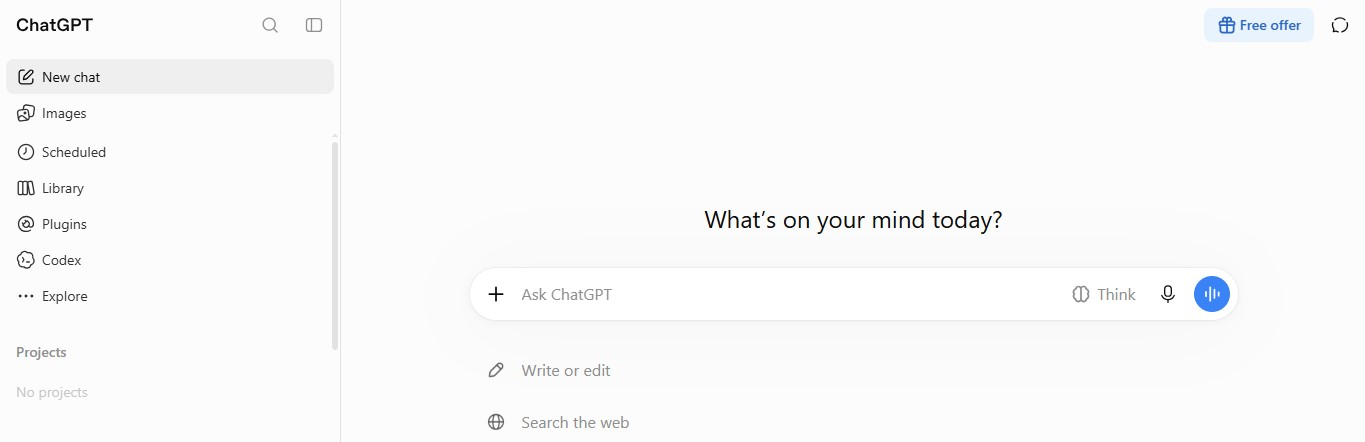
ChatGPT can help medical students work through complex topics conversationally. Its value is flexibility: students can ask follow-up questions, request simplified explanations, and practice reasoning through hypothetical cases.
Key features
- Study Mode: Encourages learning through guided questions and explanations.
- Concept breakdowns: Explains mechanisms such as cardiac conduction, renal filtration, and inflammatory pathways.
- Case-based questions: Generates hypothetical clinical scenarios for educational discussion.
- Comparison tables: Helps distinguish related conditions and mechanisms.
- Practice questions: Creates quizzes and revision exercises.
- Document analysis: Discusses uploaded, non-confidential study material in supported formats.
- Writing assistance: Helps organize notes and improve academic explanations.
Medical student example: A second-year student could ask ChatGPT to explain why left-sided heart failure may lead to pulmonary edema, then work through the underlying physiology step by step.
Limitations: ChatGPT may generate inaccurate medical claims, fabricated references, or misleading differential diagnoses. It should not be used to make decisions about actual patients without appropriate clinical supervision and validated sources.
Verdict: A flexible study assistant for building conceptual understanding, not a substitute for medical textbooks or supervised clinical training.
2. Google NotebookLM: Best for Studying Medical Lecture Notes
Website: NotebookLM
Best for: Lecture slides, medical textbooks, revision, and course-specific learning
Free access: Yes
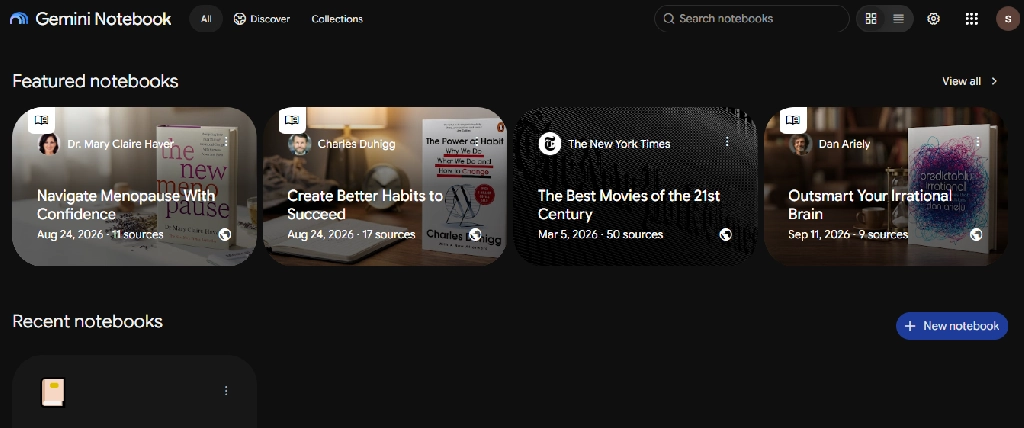
NotebookLM is useful when medical students want answers grounded in their selected educational material.
Students can organize permitted sources into notebooks and use AI to explore the content.
Key features
- Source-based questions and answers
- References to uploaded material
- Study guides and summaries
- Flashcard generation
- Quizzes and practice questions
- Audio Overviews
- Mind maps
- Cross-document comparisons
Medical student example: A student studying endocrine physiology could upload authorized lecture slides and ask NotebookLM to compare the mechanisms of insulin and glucagon.
Limitations: It can misunderstand complex figures, drug tables, or technical passages. Its citations indicate where information came from, not necessarily whether the underlying information is correct.
Verdict: Particularly valuable for studying from approved course materials and identifying knowledge gaps.
3. AMBOSS: Best for Medical Knowledge and Exam Preparation
Website: AMBOSS
Best for: Medical knowledge, clinical questions, and exam-oriented learning
Free access: Subscription-based, with trial or institutional access options depending on eligibility
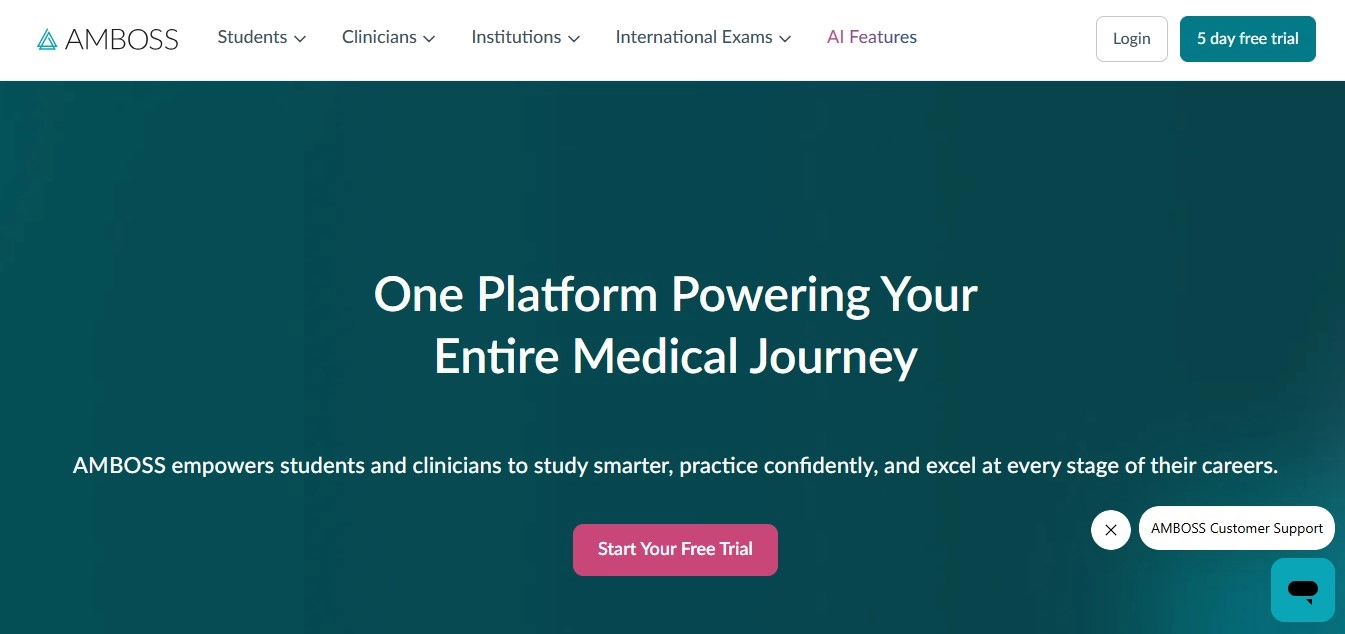
AMBOSS is a medical education platform built around a medical knowledge library and question-based learning.
Its advantage over general-purpose AI chatbots is that it is designed for medical education and clinical knowledge retrieval.
Key features
- Medical knowledge library: Structured explanations of diseases, clinical findings, investigations, and management.
- Question bank: Exam-oriented questions with explanations.
- Clinical learning resources: Helps students connect foundational knowledge with clinical applications.
- Search: Supports finding relevant medical topics and references.
- Learning analytics: Tracks question performance and areas requiring review.
- Study planning: Supports structured preparation for relevant medical examinations.
- AI-supported functionality: Selected search and assistance features vary by product and subscription.
Medical student example: A student preparing for a clinical examination could study a cardiovascular condition in the library, complete related questions, and review the reasoning behind incorrect answers.
Limitations: Content and exam coverage depend on the relevant program and subscription. Any AI-enabled clinical information should be verified, particularly when applied to real patient care.
Verdict: A strong medical-specific learning platform for students who want a structured knowledge base and question bank.
4. Osmosis AI: Best for Visual Medical Learning
Website: Osmosis AI
Best for: Visual learners, foundational medical sciences, and exam revision
Free access: Eligible Osmosis subscriptions
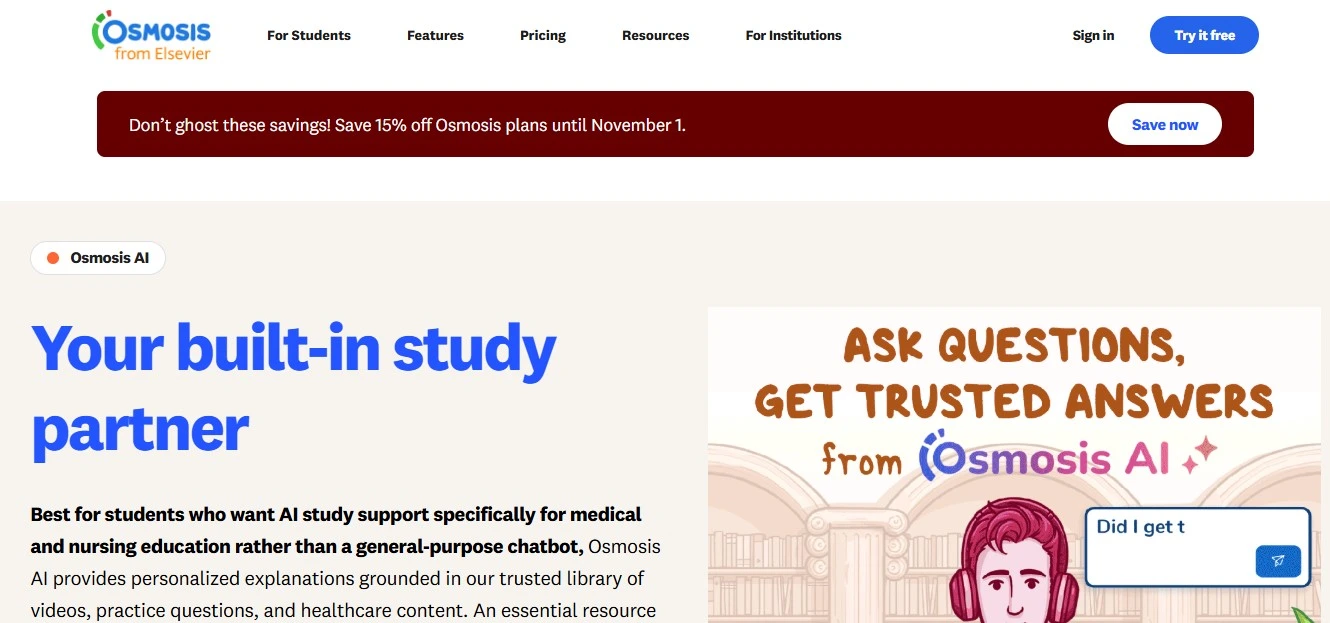
Osmosis combines illustrated medical lessons with AI-assisted explanations and study tools.
Unlike a general-purpose chatbot, Osmosis AI is grounded in curated Elsevier and Osmosis educational content.
Key features
- AI study companion: Answers questions about medical and health science topics.
- Source-grounded explanations: Connects responses to selected Elsevier educational material.
- Visual learning: Links explanations to relevant Osmosis videos.
- Tutor Mode: Supports guided exploration of concepts.
- Flashcards and quizzes: Generates revision materials.
- Video-based questions: Allows students to ask questions while reviewing supported lessons.
- Study summaries: Helps organize important information.
- Mobile access: Supports studying through compatible applications.
Osmosis introduced its AI study companion in February 2026. Its official documentation describes Elsevier-grounded explanations, Tutor Mode, practice questions, and linked learning videos.
Medical student example: A first-year student struggling with renal physiology could watch an Osmosis explanation, pause at an unfamiliar concept, and ask the AI tutor for a simpler explanation and practice questions.
Limitations: Access depends on the eligible subscription. Content coverage and AI features may differ between medical, nursing, and other health-professional products.
Verdict: Particularly useful for students who prefer visual explanations combined with interactive revision.
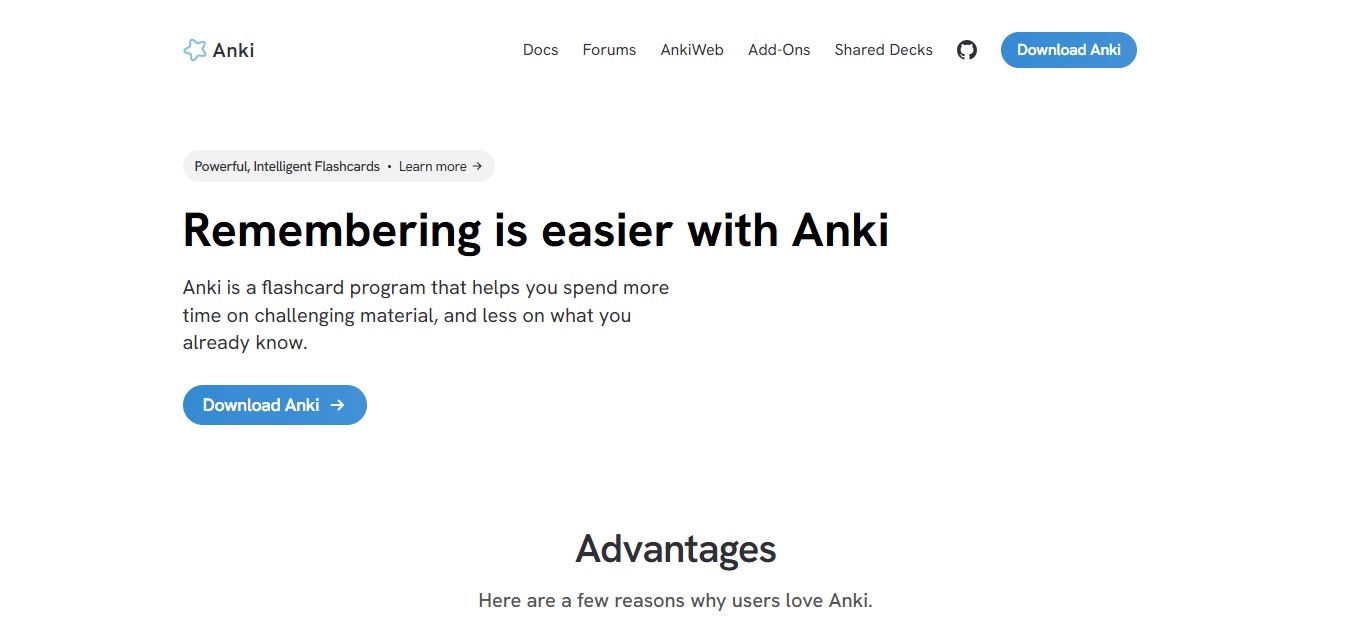
5. Anki: Best for Long-Term Medical Memorization
Website: Anki
Best for: Anatomy, pharmacology, microbiology, pathology, and long-term recall
Free access: Free on several platforms; platform-specific app costs may apply
Anki is a spaced-repetition flashcard system.
It is not primarily a generative AI tool, but it is highly relevant to medical study workflows because it schedules review based on recall performance.
Key features
- Spaced-repetition scheduling
- Custom flashcards
- Image-based cards
- Cloze deletion cards
- Media support
- Deck organization
- Review statistics
- Add-ons and extensions
- Shared decks
Medical student example: A student studying pharmacology could create cards covering drug mechanisms, adverse effects, and contraindications, then review them according to Anki’s schedule.
Limitations: Poorly designed cards can encourage isolated memorization without understanding. Third-party AI add-ons have separate accuracy, privacy, and maintenance considerations.
Verdict: A strong option for repeated factual recall, particularly when paired with conceptual learning and clinical questions.
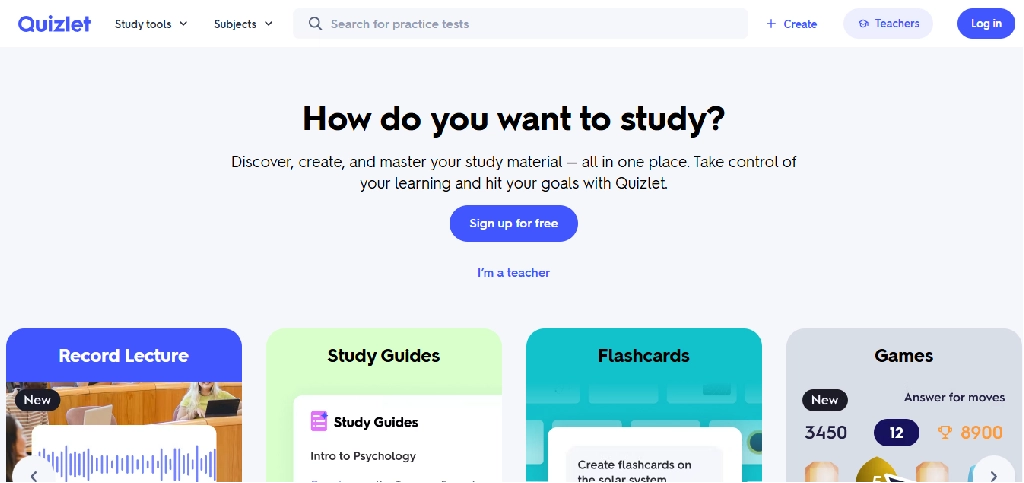
6. Quizlet: Best for Quick Flashcards and Practice Tests
Website: Quizlet
Best for: Terminology, anatomy labels, definitions, and short revision sessions
Free access: Yes, with paid advanced features
Quizlet combines flashcards with AI-supported study material generation.
Key features
- AI-generated flashcards
- Practice tests
- Study guides
- Notes-to-flashcards conversion
- Repeated review activities
- Shared study sets
- Quiz generation
- Learning progress features
Medical student example: A student preparing for a microbiology assessment could convert verified notes into flashcards covering organisms, transmission routes, and distinguishing characteristics.
Limitations: AI-generated cards may contain errors, particularly with drug dosages and clinical recommendations. Review against trusted medical sources is essential.
Verdict: Useful for short revision sessions and rapidly generating study material from verified notes.
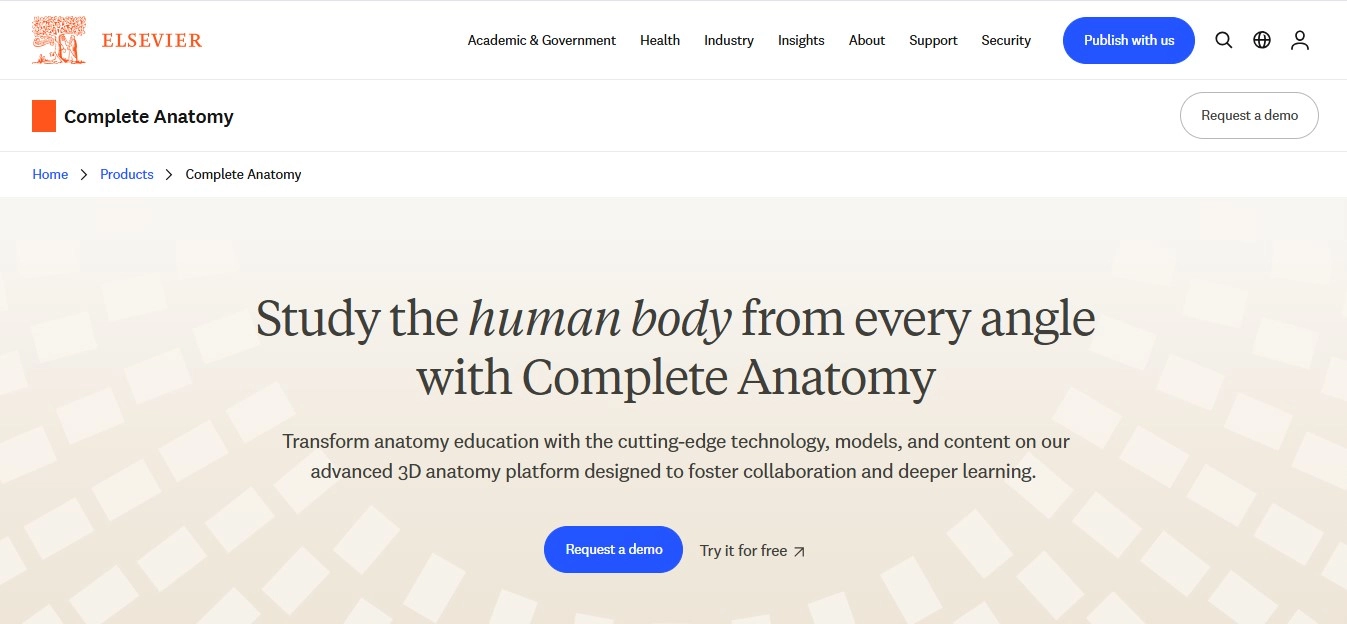
7. Complete Anatomy: Best for Interactive 3D Anatomy
Website: Complete Anatomy
Best for: Gross anatomy, spatial relationships, musculoskeletal learning, and anatomy revision
Free access: Student subscription and institutional options
Complete Anatomy is a 3D anatomy platform developed for health sciences education.
Its primary strength is interactive anatomical visualization rather than conversational AI.
Key features
- Detailed 3D anatomical models
- Interactive dissection and isolation of structures
- Male and female anatomy models
- Beating heart model
- Microscopic anatomy resources
- Augmented reality capabilities
- Radiological image resources
- Expert-led educational videos
- Courses and anatomical learning materials
Elsevier’s product documentation confirms these capabilities, including 3D models, microscopic anatomy, radiology resources, and AR mode.
Medical student example: A first-year student could explore the brachial plexus in three dimensions to better understand the relationships between nerves, muscles, and surrounding structures.
Limitations: It should not be described as a generative AI tutor unless a specific AI feature is documented. A 3D model also cannot replace cadaveric study, clinical examination, or supervised anatomical teaching.
Verdict: A valuable visual anatomy resource, particularly for students who struggle with spatial relationships.
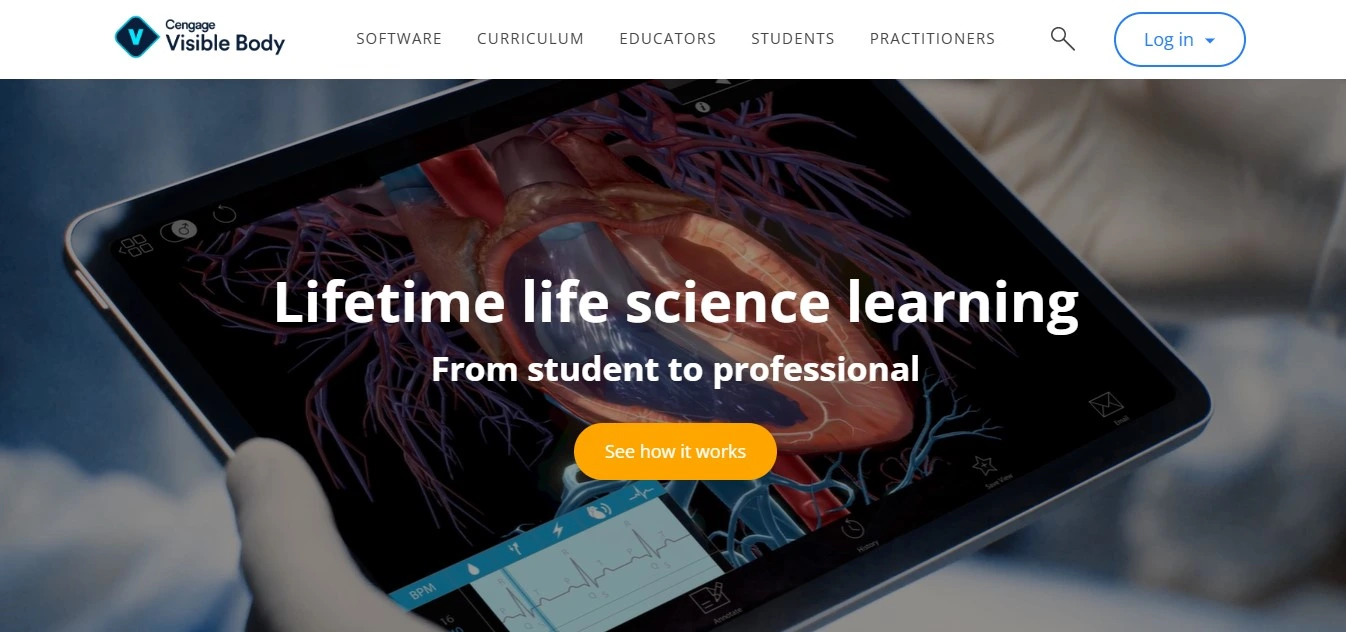
8. Visible Body: Best for Anatomy Visualization and Interactive Learning
Website: Visible Body
Best for: Anatomy, physiology, and visual medical education
Free access: Product-specific purchases, subscriptions, or institutional licensing
Visible Body provides interactive anatomical models and educational resources.
It is particularly useful for students who learn through visual exploration.
Key features
- 3D anatomy models
- Body system visualization
- Anatomical structure identification
- Interactive exploration
- Selected physiology animations
- Educational quizzes and activities
- Anatomy learning resources
- Platform-specific study features
Medical student example: A student learning the cardiovascular system could use a 3D model to understand the position of the heart and major blood vessels.
Limitations: Visible Body is primarily an anatomy visualization platform, not a generative AI assistant. Feature availability varies by product.
Verdict: Useful for visual anatomy learning, especially when combined with textbooks and practical anatomy teaching.
9. Elicit: Best for Medical Literature Reviews
Website: Elicit
Best for: Medical research projects, literature reviews, and evidence extraction
Free access: Limited
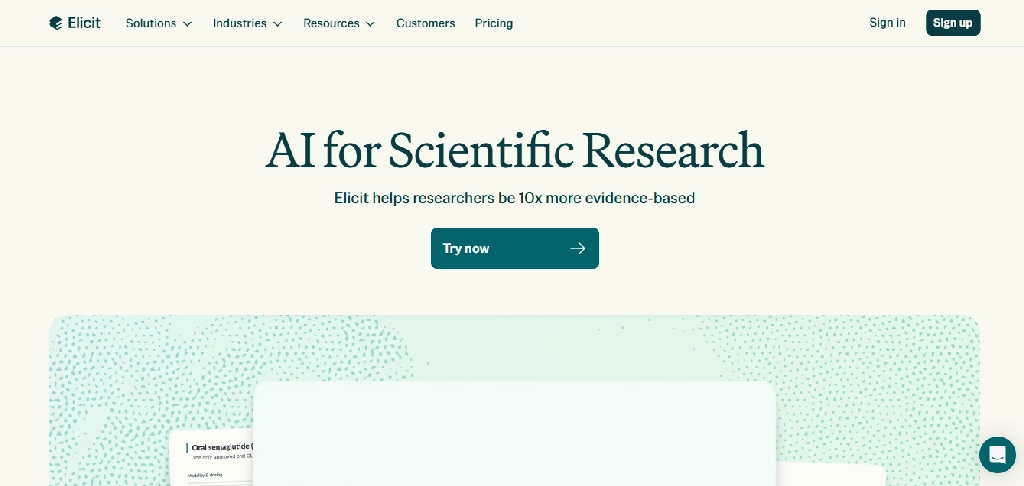
Elicit helps researchers discover papers and extract structured information from published studies.
Key features
- Academic paper discovery
- Semantic research search
- Study summaries
- Structured evidence extraction
- Research comparison tables
- Literature synthesis
- Study organization
- Export features in eligible plans
Medical student example: A student conducting a research project on sleep deprivation among healthcare workers could use Elicit to identify studies and compare research designs and outcomes.
Limitations: Elicit does not guarantee a complete literature search. Extracted findings, sample sizes, and effect estimates require verification.
Verdict: Useful for organizing research evidence, particularly during student research projects.
10. Consensus: Best for Evidence-Based Medical Research Questions
Website: Consensus
Best for: Scientific questions, literature exploration, and research-backed claims
Free access: Limited
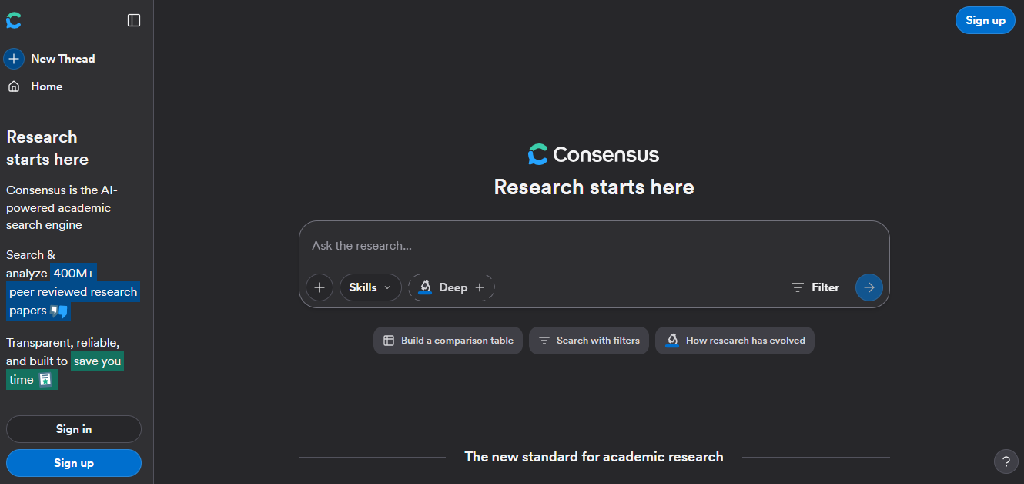
Consensus helps users explore questions using published scholarly research.
Key features
- Research paper search
- Natural-language scientific questions
- Evidence summaries
- Study filtering
- Research discovery
- Paper links
- AI-assisted synthesis
- Comparison of published findings
Medical student example: A student could investigate research on exercise and blood pressure, then review the relevant studies and their limitations.
Limitations: AI summaries cannot replace formal critical appraisal. Clinical recommendations require consideration of study quality, guidelines, and patient-specific factors.
Verdict: A useful research discovery tool, not a standalone source of clinical guidance.
11. SciSpace: Best for Understanding Complex Medical Research Papers
Website: SciSpace
Best for: Reading medical research, interpreting terminology, and understanding methods
Free access: Limited
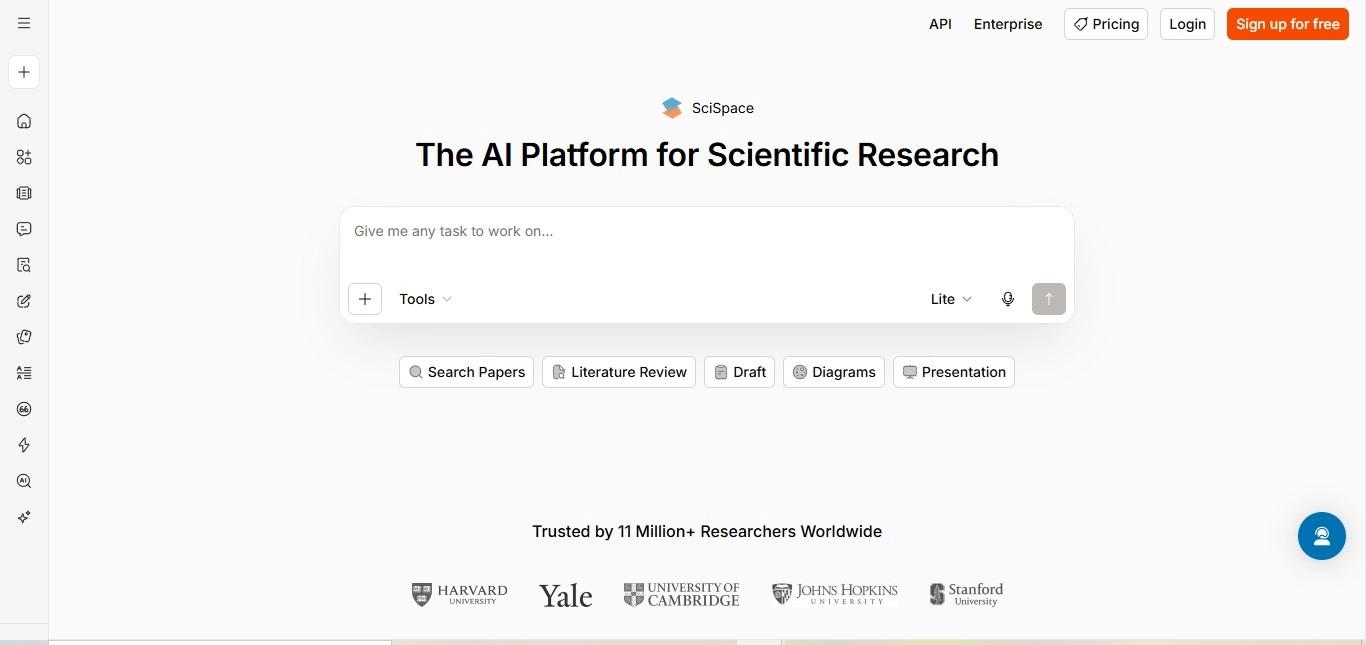
SciSpace helps students interact with academic papers and clarify difficult passages.
Key features
- PDF-based questions
- Technical terminology explanations
- Research paper summaries
- Passage-level clarification
- Literature discovery
- Research comparison
- Citation-related assistance
- Selected multilingual features
Medical student example: A student reading a randomized controlled trial could use SciSpace to understand unfamiliar statistical terminology before evaluating the study’s methods.
Limitations: Generated explanations may oversimplify study limitations or statistical findings.
Verdict: Useful for reading difficult papers, provided students still examine the original research.
12. Perplexity: Best for Finding Medical Information Sources
Website: Perplexity
Best for: Preliminary research and locating official medical sources
Free access: Yes
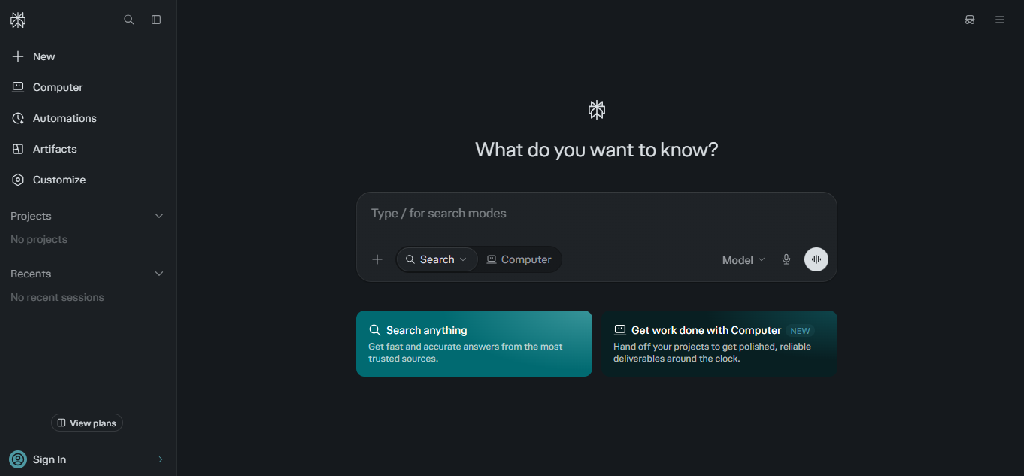
Perplexity combines web search with AI-generated explanations and source links.
Key features
- Web-based research
- Answers with source links
- Follow-up questions
- Topic exploration
- Research assistance
- File-based workflows in eligible plans
- Advanced search capabilities
Medical student example: A student could use Perplexity to locate official information about a disease classification, then review the original guidance.
Limitations: Medical information from the open web varies greatly in quality. A linked source does not guarantee the answer is correct or clinically appropriate.
Verdict: Useful for source discovery, but medical claims should be verified through authoritative references.
13. Otter.ai: Best for Medical Lecture Transcription
Website: Otter.ai
Best for: Classroom lectures, seminars, and permitted educational discussions
Free access: Yes
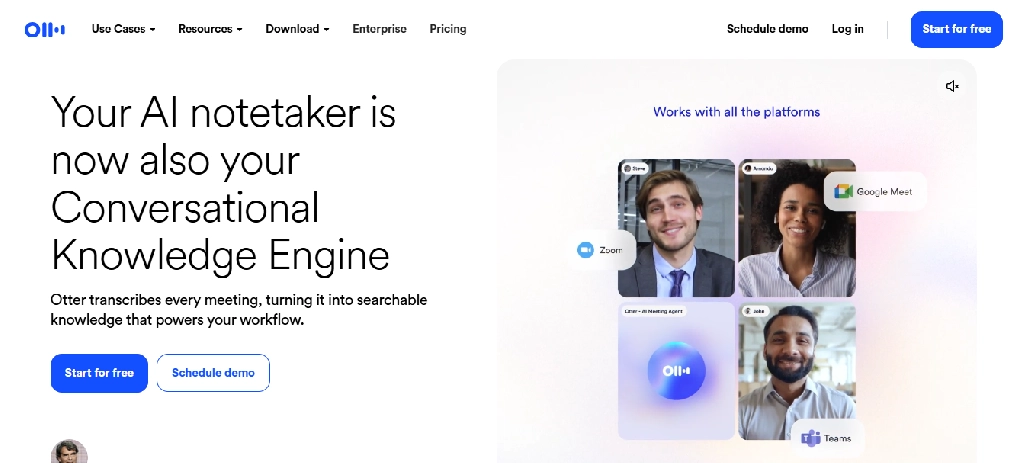
Otter.ai converts speech into searchable transcripts.
Key features
- Live transcription
- Speaker identification
- AI summaries
- Searchable transcripts
- Questions about recordings
- Meeting integrations
- Recording review
- Sharing capabilities
Medical student example: A student could transcribe a permitted physiology lecture and later search for explanations of cardiac output or vascular resistance.
Limitations: Medical terminology, drug names, dosages, and abbreviations may be transcribed incorrectly.
Important privacy consideration: Do not record patient encounters or upload identifiable patient information without explicit institutional authorization and appropriate legal safeguards.
Verdict: Useful for classroom learning where recording is permitted, but not automatically appropriate for clinical environments.
14. Geeky Medics: Best for AI Virtual Patients and OSCE Practice
Website: Geeky Medics
Best for: Clinical skills, history-taking, communication, and OSCE preparation
Free access: Free text-based virtual patient practice; paid or credit-based advanced options
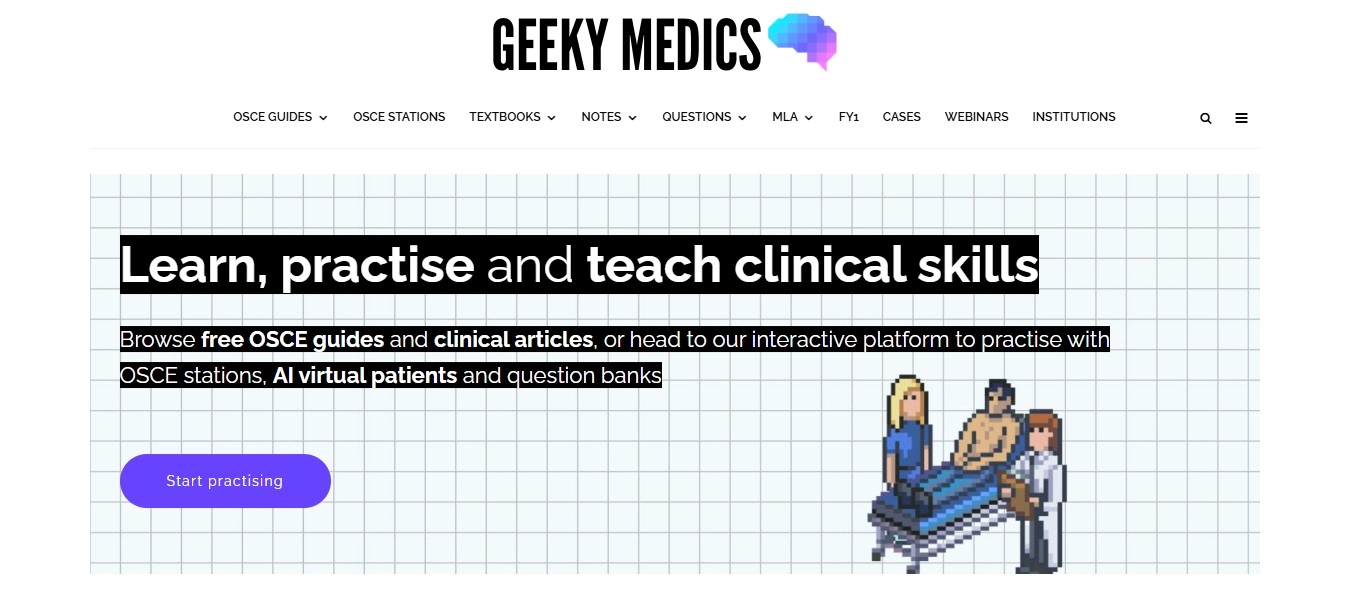
Geeky Medics provides clinical skills resources and an AI-powered virtual patient platform.
This is particularly relevant to medical students preparing for Objective Structured Clinical Examinations (OSCEs).
Key features
- AI virtual patients: Simulate patient conversations.
- History-taking practice: Helps students rehearse structured clinical interviews.
- Counselling scenarios: Supports patient communication practice.
- Clinical examination stations: Offers examination-oriented scenarios.
- Text consultations: Allows free text-based virtual patient interactions.
- Audio consultations: Provides spoken interaction using AI credits.
- Video consultations: Offers avatar-based practice for eligible users.
- AI examiner: Provides feedback on selected station performance.
- Custom scenarios: Allows users to create or generate practice stations.
Geeky Medics confirms that text consultations are free, while audio sessions use four AI credits for up to 15 minutes and video consultations use 15 credits for up to 10 minutes.
Medical student example: A student preparing for an OSCE could practice taking a history from a simulated patient presenting with abdominal pain, then review feedback on the questions asked.
Limitations: Simulated patient responses and automated marking may not reflect the full complexity of real clinical encounters. They do not replace standardized patients, faculty assessment, or supervised practice.
Verdict: One of the more relevant specialized AI tools for clinical communication and OSCE preparation.
15. Touch Surgery: Best for Learning Surgical Procedures
Website: Touch Surgery Simulations
Best for: Surgical education, procedural knowledge, and clinical training
Free access: Free educational simulation app; other ecosystem products differ
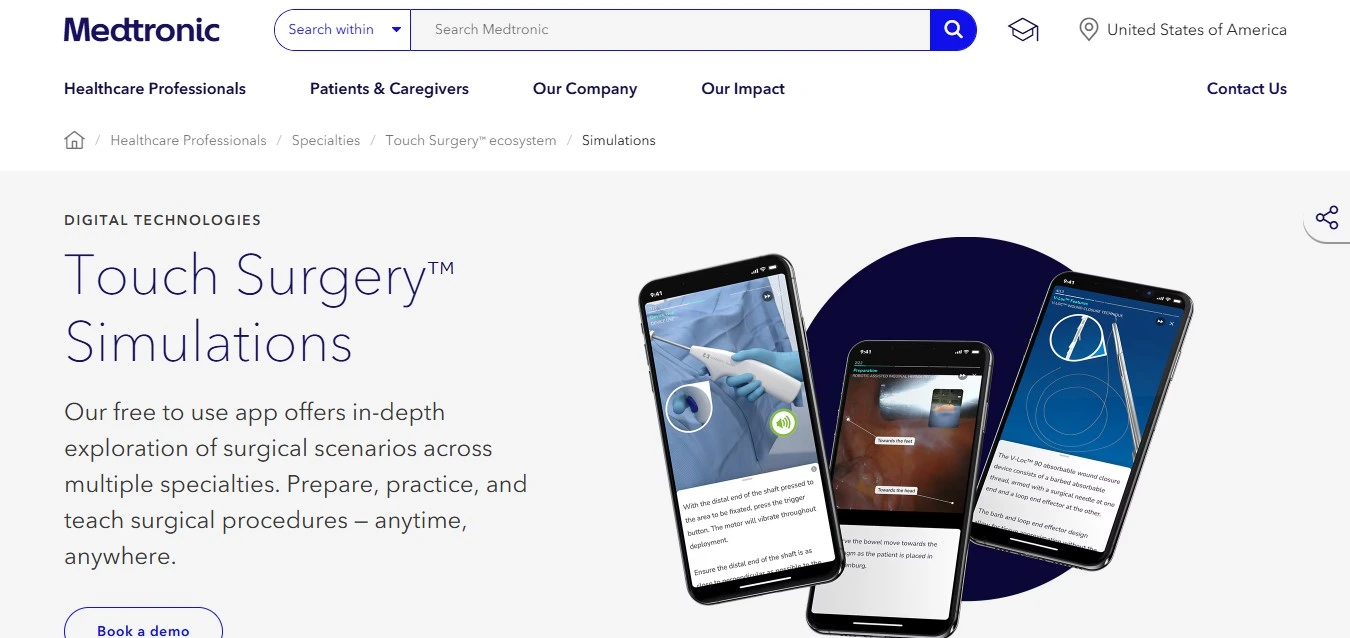
Touch Surgery provides interactive surgical simulations designed to help learners understand procedural steps.
Its primary function is surgical education, not generative AI tutoring.
Key features
- Interactive surgical simulations
- Procedure-specific learning
- Step-by-step surgical scenarios
- Training across multiple specialties
- Mobile educational access
- Procedural rehearsal
- Surgical decision-making practice
- Selected validated educational simulations
Medtronic states that Touch Surgery provides more than 200 simulations across over 17 specialties and that the educational app is available free.
Medical student example: A student preparing for a surgical rotation could review the major steps of a common operation before attending a supervised teaching session.
Limitations: Simulated procedural learning does not establish practical surgical competence. Students require supervised clinical training and assessment.
Verdict: A useful surgical education resource, particularly for students beginning clinical rotations.
Best AI Tools for Medical Students by Subject
| Medical subject | Recommended tools | Main learning objective |
| Anatomy | Complete Anatomy, Visible Body, Anki | Visualizing structures and remembering relationships |
| Physiology | Osmosis AI, ChatGPT, NotebookLM | Understanding mechanisms and processes |
| Biochemistry | Osmosis AI, Anki, NotebookLM | Metabolic pathways and concept revision |
| Pharmacology | Anki, AMBOSS, Quizlet | Drug mechanisms, classes and adverse effects |
| Pathology | AMBOSS, Osmosis AI, NotebookLM | Disease mechanisms and clinical correlations |
| Microbiology | Anki, Quizlet, Osmosis AI | Organisms, mechanisms and recall |
| Clinical medicine | AMBOSS, Geeky Medics | Knowledge application and clinical reasoning practice |
| Clinical communication | Geeky Medics | History-taking and counselling |
| Surgery | Touch Surgery, AMBOSS | Procedural knowledge and preparation |
| Medical research | Elicit, Consensus, SciSpace | Literature discovery and appraisal |
| Lecture revision | NotebookLM, Otter.ai | Organizing and reviewing educational material |
Best AI Tool Combinations by Year of Medical School
Medical education structures differ across countries, but the learning requirements often shift from foundational sciences toward clinical application.
Preclinical Years: Anatomy, Physiology and Biochemistry
Suggested study stack: Osmosis AI + Complete Anatomy + Anki + NotebookLM.
This combination supports conceptual explanations, spatial visualization, repeated recall and course-specific revision.
For example, a student studying the brachial plexus could explore its anatomy in Complete Anatomy, review the clinical relevance through course materials, and use Anki to remember important nerve distributions.
Intermediate Years: Pathology, Pharmacology and Microbiology
Suggested study stack: AMBOSS + Osmosis AI + Anki + NotebookLM.
The emphasis shifts toward understanding disease mechanisms, connecting symptoms with pathophysiology, and retaining large amounts of information.
Clinical Years: History-Taking and Clinical Reasoning
Suggested study stack: AMBOSS + Geeky Medics + supervised clinical learning.
Students can use AI virtual patients to practice structured interviews and case-based questions, then compare their performance with faculty feedback.
Real patient encounters should always follow institutional privacy, consent, and supervision requirements.
Research Projects and Dissertations
Suggested study stack: Elicit + Consensus + SciSpace + Zotero.
This combination supports paper discovery, evidence comparison, reading difficult studies, and organizing citations.
Zotero is not primarily an AI tool, but it provides important reference-management functionality.
How to Use AI to Study a Medical Topic
Consider a student learning about heart failure.
- Understand the physiology. Use Osmosis AI or a guided learning assistant to review cardiac output, preload, afterload and compensatory mechanisms.
- Review course materials. Upload permitted lecture notes to NotebookLM and ask questions grounded in those sources.
- Study anatomy. Use a 3D anatomy platform to examine the chambers, valves and associated structures.
- Practice recall. Create verified Anki cards covering mechanisms, symptoms and relevant terminology.
- Apply knowledge. Complete appropriate AMBOSS questions or supervised case discussions.
- Review mistakes. Identify whether errors came from missing factual knowledge, misunderstanding physiology or incorrect clinical reasoning.
The key is to move from understanding to recall and then to application.
Can AI Help Medical Students Prepare for Licensing Exams?
Yes, but the most useful tools depend on the examination system.
Students preparing for USMLE-style examinations may use AMBOSS and Osmosis resources designed around relevant US medical education requirements.
Students preparing for OSCE-style assessments may benefit from Geeky Medics’ simulated consultations.
For other national licensing examinations, students should verify that question banks, clinical guidelines, terminology, and exam formats match their own curriculum.
AI-generated practice questions should supplement official exam resources, not replace them.
Are AI Medical Study Tools Reliable?
Medical education requires a higher standard of accuracy than many general learning tasks.
A small factual error in a history essay is different from an incorrect drug dosage or misunderstanding of a contraindication.
Students should evaluate tools based on:
- Whether the product identifies its medical information sources
- Whether those sources are authoritative and up to date
- Whether generated explanations distinguish established evidence from uncertainty
- Whether references can be inspected
- Whether clinical scenarios are educational simulations rather than patient-specific advice
- Whether the tool provides meaningful feedback on mistakes
- Whether medical content has appropriate expert oversight
For example, Osmosis AI states that its explanations are grounded in curated Elsevier medical content. That is a useful distinction from unrestricted open-web answers, although individual outputs still need verification.
Privacy and Patient Information: What Medical Students Must Know
Medical students may encounter identifiable patient information during clinical training.
This creates privacy obligations that do not apply to ordinary study notes.
Students should not upload patient names, medical record numbers, photographs, clinical notes, imaging, or other identifiable information to consumer AI tools unless their institution has explicitly authorized that workflow and the required safeguards are in place.
Even removing a patient’s name may not be enough to de-identify a case.
Safer educational uses include institution-approved simulated cases, fictional scenarios, authorized teaching materials, and properly governed research data.
For real clinical information, students must follow applicable laws, institutional policies, and supervising clinicians’ instructions.
Free vs. Paid AI Tools for Medical Students
| Tool | Free access | Paid or restricted functionality |
| ChatGPT | Yes | Higher limits and advanced features |
| NotebookLM | Yes | Expanded usage through eligible plans |
| AMBOSS | Trial or institutional options | Knowledge library and question-bank subscriptions |
| Osmosis AI | Trial options may be available | Eligible education subscriptions |
| Anki | Free on several platforms | Platform-specific app costs |
| Quizlet | Yes | Advanced AI study features |
| Complete Anatomy | Trial availability | Student and institutional subscriptions |
| Visible Body | Product-dependent | Paid products or institutional licensing |
| Elicit | Limited | Advanced research workflows |
| Consensus | Limited | Advanced research features |
| SciSpace | Limited | Higher AI usage and research features |
| Perplexity | Yes | Expanded research and model access |
| Otter.ai | Yes | Higher transcription limits |
| Geeky Medics | Free text virtual patients | Audio/video credits and subscription features |
| Touch Surgery | Free educational app | Other ecosystem services differ |
Before purchasing, students should check whether their medical school provides institutional access. Professional medical learning platforms can be expensive, and duplicate subscriptions may not be necessary.
Frequently Asked Questions
What is the best AI tool for medical students?
There is no universal winner. Osmosis AI is particularly relevant for medical concept learning, AMBOSS for structured medical knowledge and exam questions, NotebookLM for course materials, and Geeky Medics for AI virtual patient practice.
Which AI tools are best for anatomy?
Complete Anatomy and Visible Body provide interactive anatomical visualization. Anki helps students memorize anatomical relationships, while NotebookLM can support revision using authorized anatomy notes.
What is the best AI tool for medical exam preparation?
AMBOSS and Osmosis are relevant medical-specific learning platforms. Anki supports spaced repetition, and NotebookLM can generate practice questions from selected study material.
Can ChatGPT help medical students?
Yes. ChatGPT can explain medical concepts, generate hypothetical practice questions, and guide students through educational discussions. Its outputs should be verified against authoritative medical references.
Which AI tools help with clinical reasoning?
Geeky Medics offers AI virtual patients for history-taking and consultation practice. AMBOSS supports case-based medical learning. Neither replaces supervised clinical training.
Can AI tools help with OSCE preparation?
Yes. Geeky Medics provides simulated patient conversations and AI-assisted feedback, including free text interactions and paid audio/video modes.
What AI tools are useful for medical research?
Elicit, Consensus and SciSpace support research discovery and paper analysis. Zotero helps organize references and bibliographies.
Is Anki an AI tool?
Anki is primarily a spaced-repetition flashcard platform, not a generative AI assistant. Some third-party extensions add AI features, but these should be evaluated separately.
Can medical students use AI with real patient information?
Only when the workflow is specifically authorized and meets applicable privacy, security, consent, and institutional requirements. Consumer AI accounts should not be assumed suitable for patient data.
Can AI replace clinical training?
No. AI simulations and study assistants can support preparation, but clinical competence requires supervised patient encounters, practical skills, assessment, and professional judgment.
Final Verdict: Which AI Tools Should Medical Students Choose?
Medical students should select tools according to their stage of training and immediate learning needs.
For medical explanations, Osmosis AI and ChatGPT offer interactive support.
For course-based revision, NotebookLM helps students work with their own educational sources.
For medical knowledge and exam questions, AMBOSS provides specialized resources.
For memorization, Anki and Quizlet support repeated recall.
For anatomy, Complete Anatomy and Visible Body offer interactive visual learning.
For clinical skills, Geeky Medics provides AI virtual patient practice.
For surgical education, Touch Surgery offers interactive procedure simulations.
For research, Elicit, Consensus and SciSpace help students explore academic literature.
The most effective combination is usually a medical knowledge resource, a reliable revision system, and one or two specialized tools suited to the student’s current subjects.
AI can support medical education, but it cannot replace verified medical knowledge, supervised clinical experience, or responsibility for patient safety.