
In 2026, building with artificial intelligence isn’t limited to startups or research labs — it’s mainstream.
From customer support to predictive analytics, businesses now rely on AI platforms that offer pre-trained models, APIs, and scalable infrastructure.
Whether you’re a developer integrating machine learning or a business automating workflows, choosing the right AI platform determines your speed, cost, and long-term ROI.
This guide compares the best AI platforms for developers and businesses in 2026, covering features, pricing, and real-world applications.
What Is an AI Platform?
An AI platform provides tools, APIs, and environments for building, training, deploying, and managing artificial intelligence models.
It’s the backbone of the modern AI ecosystem — offering everything from natural language processing (NLP) to computer vision, data labeling, analytics, and automation.
Typical components include:
- Model training environments (for ML engineers)
- Ready APIs for NLP, vision, or speech (for developers)
- Low-code/no-code tools (for non-technical users)
- Enterprise integration layers (for businesses)
If you’re exploring easier ways to build AI products without heavy coding, you may also want to check our comparison of the best no-code AI app builders that empower teams to deploy AI visually.
Top AI Platforms for Developers & Businesses (2026)
| Platform | Best For | Key Features | Pricing |
| Google Cloud AI | Scalable AI pipelines | Vertex AI, Gemini API, AutoML, BigQuery ML | Pay-as-you-go |
| AWS SageMaker | End-to-end ML deployment | Model tuning, labeling, deployment, A/B testing | Pay-as-you-go |
| Microsoft Azure AI | Enterprise AI & NLP | Azure OpenAI Service, Cognitive APIs, AI Studio | Pay-as-you-go |
| IBM WatsonX | Regulated industries | Governance, transparency, enterprise LLMs | Custom |
| OpenAI Platform | Developers & startups | GPT-4, Whisper, DALL·E, fine-tuning, embeddings | Pay-as-you-go |
| Anthropic Claude API | Context-aware AI | 200k-token context window, safety-tuned reasoning | Usage-based |
| Hugging Face | Open-source community | 300,000+ models, Inference API, Spaces for hosting | Free / Paid tiers |
| DataRobot | AI for business intelligence | Predictive modeling, AutoML, governance | Enterprise pricing |
Detailed Overview of Leading AI Platforms
1. Google Cloud AI (Vertex AI + Gemini Integration)
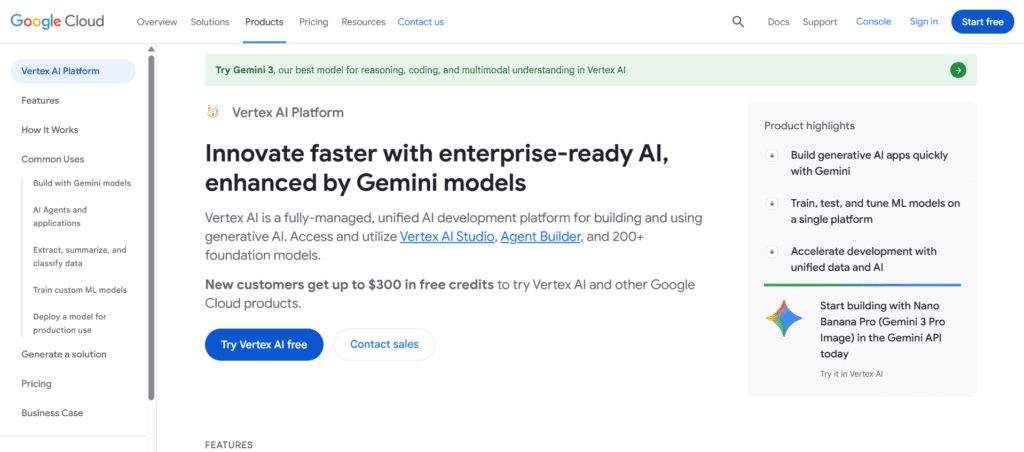
Best For: Scalable enterprise AI & developers
Features:
- Vertex AI unifies ML pipelines from training to deployment
- Gemini (Google’s multimodal LLM) integrates with Workspace & Search
- BigQuery ML brings ML to SQL analysts
Use Case: Automate data insights and chat-based customer workflows.
Pricing: Pay-as-you-go for compute, storage, and API calls.
2. AWS SageMaker
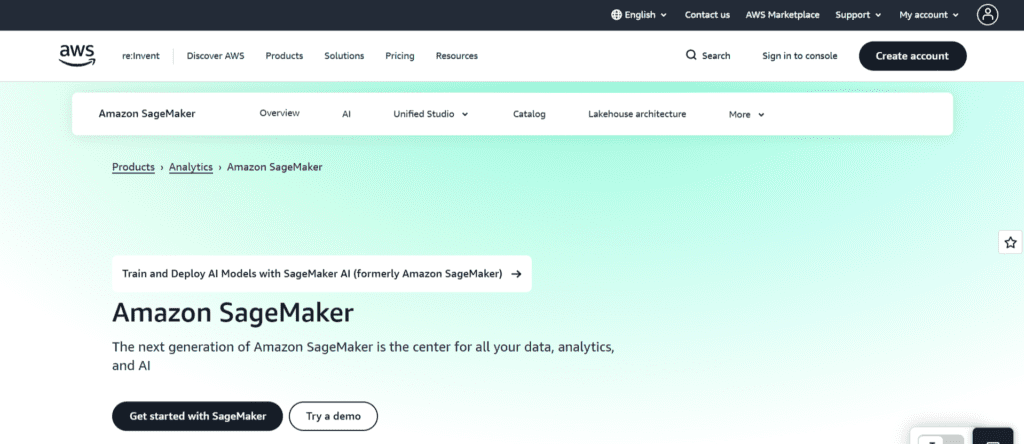
Best For: ML engineers and developers
Features:
- Model building, labeling, training, and hosting under one suite
- SageMaker Canvas for no-code model training
- Integration with AWS Lambda, EC2, and S3
Use Case: Predictive analytics for supply chain or finance.
Pricing: Pay-as-you-go, based on instance hours and storage.
3. Microsoft Azure AI
Best For: Enterprises using the Microsoft ecosystem
Features:
- Azure OpenAI Service gives access to GPT-4 and DALL·E APIs
- Cognitive Services for speech, vision, and language
- Azure AI Studio for low-code model customization
Use Case: Enterprises building multilingual bots or analytics dashboards.
Pricing: Usage-based, integrated with Azure credits.
4. IBM WatsonX
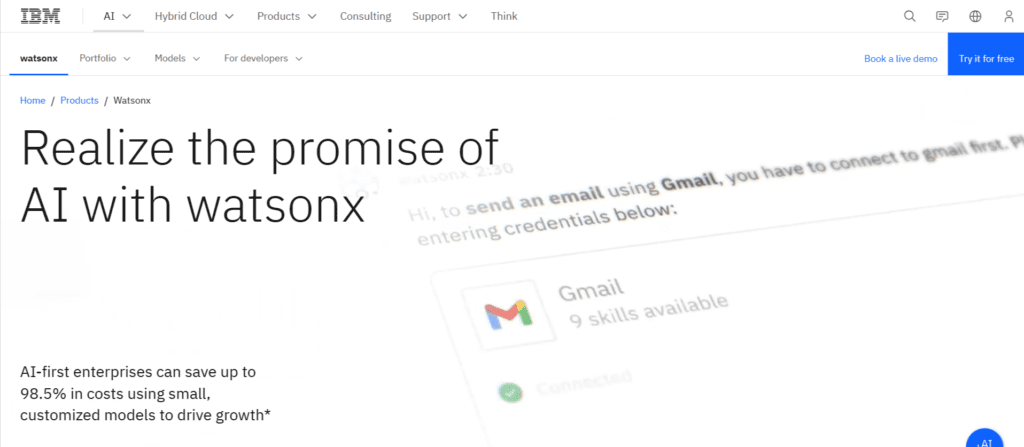
Best For: Regulated industries (healthcare, finance)
Features:
- Focused on data governance and explainable AI
- watsonx.ai for model building, watsonx.data for data lakes
- watsonx.Governance ensures compliance with AI laws
Use Case: Audit-ready AI for banks or pharmaceutical firms.
Pricing: Enterprise-grade, custom quote.
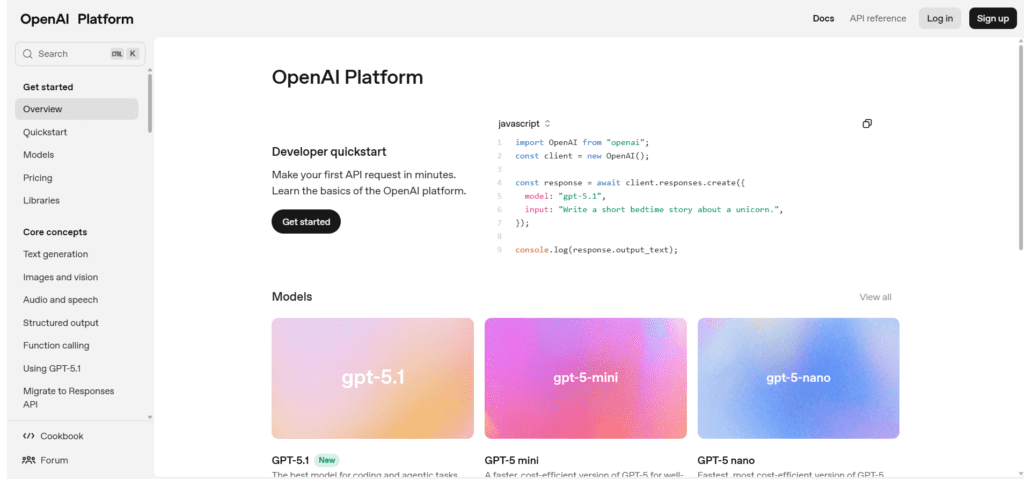
5. OpenAI Platform
Best For: Developers building generative AI applications
Features:
- GPT-4 Turbo and GPT-4 Vision APIs
- Whisper API for speech-to-text
- DALL·E 3 for image generation
- Embedding & fine-tuning capabilities
Use Case: AI chatbots, writing assistants, or creative tools.
Pricing: Usage-based (tokens and models).
Many teams use OpenAI to build custom automations, chatbots, or AI assistants that integrate into existing systems. If you’re comparing generative tools for flexible deployment on desktop & cloud workflows, explore top AI software tools for PC to evaluate hybrid setups.
6. Anthropic Claude API
Best For: Long-context reasoning and compliance
Features:
- 200K-token memory for document analysis
- Safe, explainable model outputs
- API access for enterprise LLM integration
Use Case: Document summarization, compliance workflows.
Pricing: Usage-based ($8–$24 per million tokens).
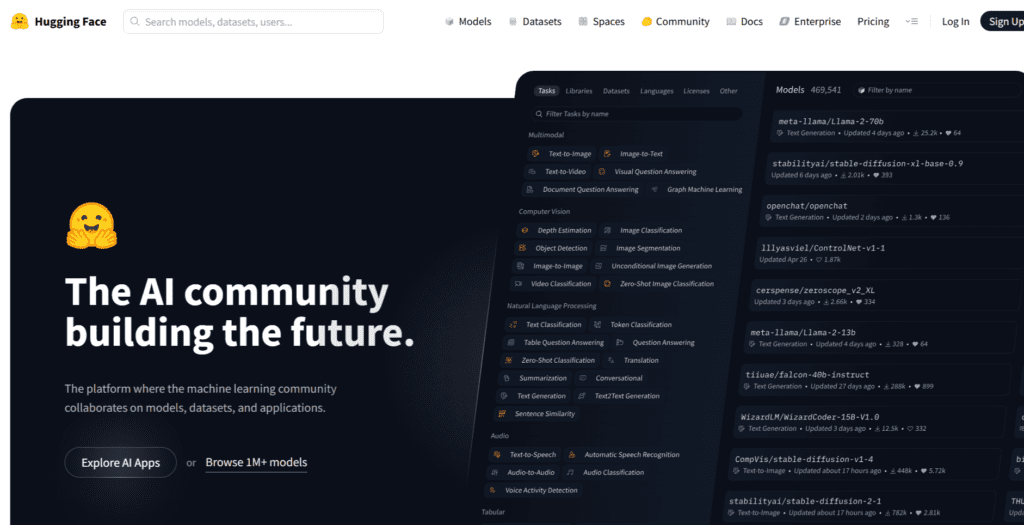
7. Hugging Face Hub & Spaces
Best For: Open-source AI research & collaboration
Features:
- 300,000+ pre-trained models (BERT, LLaMA, Stable Diffusion)
- Spaces for hosting ML demos
- Transformers library for developers
Use Case: Prototyping or community-driven AI model hosting.
Pricing: Free for the community, paid for enterprise hosting.
8. DataRobot AI Cloud
Best For: Business intelligence & predictive modeling
Features:
- Automated model generation (AutoML)
- Bias detection and governance
- Integration with Tableau, Snowflake, and Power BI
Use Case: Enterprise analytics teams predicting customer churn or risk.
Pricing: Custom enterprise pricing.
Comparison Table
| Platform | Ease of Use | API Access | No-Code Support | Enterprise Features | Free Tier |
| Google Cloud AI | 4/5 | Yes | Partial | Yes | Partial |
| AWS SageMaker | 3/5 | Yes | Yes(Canvas) | Yes | Partial |
| Microsoft Azure AI | 4/5 | Yes | Yes(AI Studio) | Yes | Partial |
| IBM WatsonX | 3/5 | Yes | Partial | Yes | No |
| OpenAI | 4/5 | Yes | Partial | Partial | Yes |
| Anthropic Claude | 4/5 | Yes | Partial | Partial | Partial |
| Hugging Face | 4/5 | Yes | Yes(Spaces) | Partial | Yes |
| DataRobot | 3/5 | Yes | Yes | Yes | Partial |
Security & Compliance
Top AI platforms in 2026 adhere to global data protection laws, including GDPR, HIPAA, and ISO 27001.
- Azure AI and IBM WatsonX emphasize enterprise-grade security.
- OpenAI and Anthropic offer content moderation and safety tuning.
- Google Cloud AI integrates model audit logs via Vertex Explainable AI.
For enterprise users, governance is no longer optional — it’s built into every leading platform.
Use Case Examples
| Industry | AI Platform | Application |
| Retail | AWS SageMaker | Predict customer demand |
| Healthcare | IBM WatsonX | Analyze patient risk models |
| Finance | Azure AI / DataRobot | Detect fraud and optimize portfolios |
| Education | Google Cloud AI | Personalized learning recommendations |
| Marketing | OpenAI / Hugging Face | Generate personalized content |
Trends Shaping AI Platforms in 2026
- Hybrid Cloud + Edge AI – Models running locally with cloud sync.
- Multimodal APIs – Vision + text + audio unified (Gemini, GPT-4V).
- AI Governance Dashboards – Transparency and bias monitoring.
- Open-Source + Proprietary Mix – Hugging Face collaboration with cloud providers.
- AI-as-a-Service Pricing – Subscription + pay-per-output models.
These trends highlight how AI is evolving from a toolset into an ecosystem.
Conclusion
Choosing the right AI platform depends on your needs:
- Developers → OpenAI, Hugging Face, or AWS SageMaker
- Enterprises → Azure AI, Google Cloud, or IBM WatsonX
- Startups → Anthropic Claude or DataRobot
Each platform balances power, flexibility, and compliance differently.
Reliqus Marketing helps startups and enterprises integrate AI tools — from model APIs to workflow automation — for marketing, analytics, and innovation.
If you’d like expert help building a scalable AI-powered system tailored to your business, get a free consultation today or visit the Reliqus Marketing for services & case studies.
FAQs
Q1. Which is the best AI platform for developers in 2026?
OpenAI, Google Cloud AI, and Hugging Face lead for developers due to flexible APIs and open ecosystems.
Q2. Which AI platform is best for enterprise-level scalability?
Azure AI, Google Vertex AI, and IBM WatsonX offer the best enterprise-grade compliance and scalability.
Q3. What’s the difference between OpenAI and AWS SageMaker?
OpenAI provides generative models via API, while SageMaker is an ML infrastructure for building and deploying custom models.
Q4. Is there a free AI platform for beginners?
Hugging Face and OpenAI offer free tiers ideal for experimentation.
Q5. Can businesses fine-tune their own models?
Yes, Google Vertex AI, AWS SageMaker, and OpenAI fine-tuning APIs support custom model training.