
Most Shopify brands are not struggling because they lack AI tools.
They are struggling because their e-commerce operations remain fragmented.
Support happens in one system.
Email automation lives somewhere else.
Reviews operate independently.
Product recommendations are disconnected from customer behaviour.
Ad creative workflows stay manual.
Search experiences feel outdated.
Retention campaigns rely on static logic while customer expectations evolve faster every quarter.
This is one of the biggest operational shifts happening inside ecommerce today.
AI is no longer just a feature category.
It is becoming infrastructure.
And the strongest Shopify brands are not simply installing “AI apps.”
They are building operational systems where:
- customer behaviour informs automation
- support becomes proactive
- search becomes predictive
- retention becomes adaptive
- creative production accelerates
- recommendations become contextual
- workflows become connected
That is why modern ecommerce stacks increasingly involve platforms like Shopify, Klaviyo, Gorgias, Rebuy, Boost AI Search & Discovery, Judge.me, and AI-assisted creative systems together.
Not because brands want more software.
Because modern ecommerce increasingly depends on reducing operational friction across the entire customer journey.
This guide is not another “best AI tools for Shopify” list.
It is a breakdown of how modern Shopify brands are actually using AI operationally across:
- reviews
- support
- retention
- search
- recommendations
- creative production
- customer recovery
Because the important question is no longer:
“Which AI tools should we install?”
It is:
“Where is customer friction slowing growth today?”
AI Changed Ecommerce Operations Faster Than Most Brands Expected
For years, ecommerce technology evolved in layers.
A review tool solved reviews.
An email platform solved email.
A support platform handled support.
Everything operated independently.
That model is slowly disappearing.
Modern ecommerce workflows are increasingly connected.
A customer browses products.
Search behaviour updates recommendations.
Email systems adapt follow-ups.
Support platforms understand order history.
Reviews influence personalization.
Ad creative changes based on campaign performance.
The ecommerce stack starts behaving less like isolated software and more like operational infrastructure.
This is where AI becomes valuable operationally.
Not because it replaces teams.
Because it reduces coordination friction across customer experiences.
The strongest Shopify brands today are not necessarily using the most AI.
They are using AI in the most operationally connected way.
What Shopify Teams Actually Struggle With
If you spend enough time reading ecommerce operator discussions, agency breakdowns, and DTC founder conversations, the frustrations become remarkably consistent.
Not because everyone uses identical platforms.
Because ecommerce bottlenecks repeat operationally.
One recurring issue is fragmented customer understanding.
Marketing knows one version of the customer.
Support knows another.
Retention systems operate independently.
Another common frustration is retention inefficiency.
Brands spend heavily acquiring customers while recovery and lifecycle systems remain underdeveloped.
There is also increasing fatigue around creative production.
Ads need constant refresh cycles.
Campaign assets multiply across platforms.
Teams spend enormous time adapting and resizing content operationally.
Search and discovery remain another underestimated problem.
Many brands optimize acquisition aggressively while customers still struggle finding products efficiently after landing.
And perhaps the biggest issue:
Customer experience becomes inconsistent between systems.
The strongest ecommerce stacks solve this by making operational layers communicate more intelligently.
This is also why many scaling DTC companies are investing in a connected ecommerce tech stack for Shopify brands instead of relying on disconnected apps.
The Seven Layers of the Modern AI Ecommerce Stack
Before selecting tools, define the operational layer.
Most mature Shopify AI systems operate across seven functions.
Trust
Where customers decide whether the brand feels credible.
Support
Where hesitation gets resolved.
Retention
Where lifecycle communication operates.
Search & Discovery
Where product exploration becomes easier.
Recommendations
Where customer intent gets amplified.
Creative Production
Where campaigns scale operationally.
Recovery
Where abandoned momentum returns.
Different tools support different operational layers.
The strongest brands connect them naturally. Many scaling brands also invest in custom Shopify app development to streamline operational workflows.
AI Reviews: Why Trust Infrastructure Became More Operationally Important
Reviews are no longer just social proof.
They increasingly behave like operational intelligence.
Customer language.
Product objections.
Use cases.
Expectation patterns.
All becoming visible operationally.
1. Judge.me
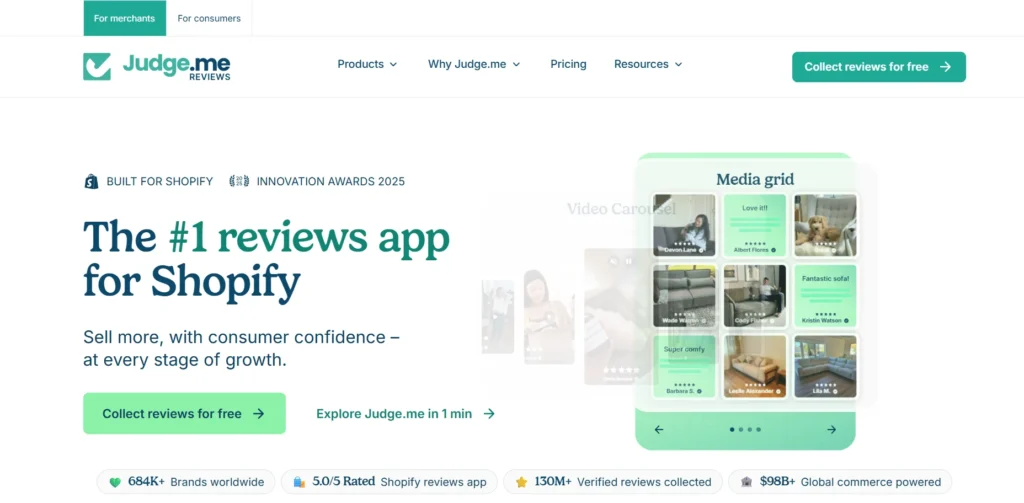
Judge.me became popular partly because it reduced friction around collecting and displaying customer trust signals.
But operationally, its value goes beyond reviews themselves.
Brands increasingly use review ecosystems to understand:
- customer language
- recurring objections
- product satisfaction
- visual proof
- post-purchase sentiment
The strongest implementations usually integrate reviews into broader lifecycle systems rather than treating them as isolated widgets.
Where Judge.me tends to work especially well:
- growing DTC brands
- visually driven ecommerce
- retention-focused stores
- customer-feedback-heavy categories
The operational advantage is continuity between customer experience and marketing communication.
AI Support: Where Customer Experience Becomes Operationally Scalable
Support changed dramatically once ecommerce volume increased.
Customers no longer expect responses eventually.
They expect resolution during consideration.
That changes support from reactive service into conversion infrastructure.
2. Gorgias

Gorgias became increasingly important because ecommerce support now depends heavily on operational context.
Orders.
Shipping.
Customer history.
Product interactions.
Everything connected.
The strongest support systems reduce friction before abandonment happens.
Questions get answered faster.
Support becomes informed.
Customer history becomes visible operationally.
Where Gorgias performs especially well:
- support-heavy stores
- subscription brands
- high-volume ecommerce operations
- customer-service-driven retention systems
The important shift is that support increasingly influences conversion directly rather than only solving post-purchase problems.
AI Retention: Why Modern Ecommerce Growth Depends on Lifecycle Systems
One of the most expensive mistakes ecommerce brands make is repeatedly paying to reacquire customers who already showed intent.
Modern retention systems increasingly behave like operational ecosystems rather than email tools.
3. Klaviyo
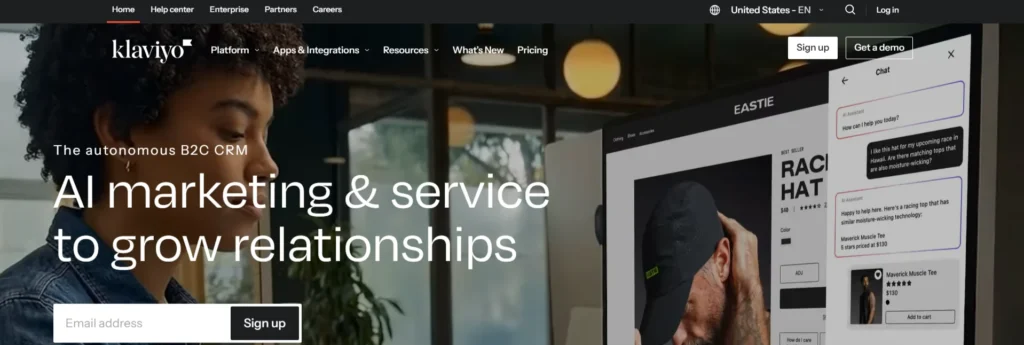
Klaviyo became foundational for many Shopify brands because it connected behavioural data with lifecycle communication.
The important operational shift is this:
Campaigns stop being static broadcasts.
Communication becomes behaviour-aware.
Browse activity.
Cart abandonment.
Purchase timing.
Product interest.
Everything influences workflow logic.
Where Klaviyo works especially well:
- lifecycle marketing
- retention automation
- customer segmentation
- post-purchase communication
- recovery workflows
The strongest brands increasingly treat retention systems as revenue infrastructure rather than marketing channels.
AI Search & Discovery: Where Product Exploration Stops Feeling Frustrating
Search is one of the most underestimated operational layers in ecommerce.
Because customers who search usually already have intent.
The challenge is reducing friction between interest and product discovery.
4. Boost AI Search & Discovery
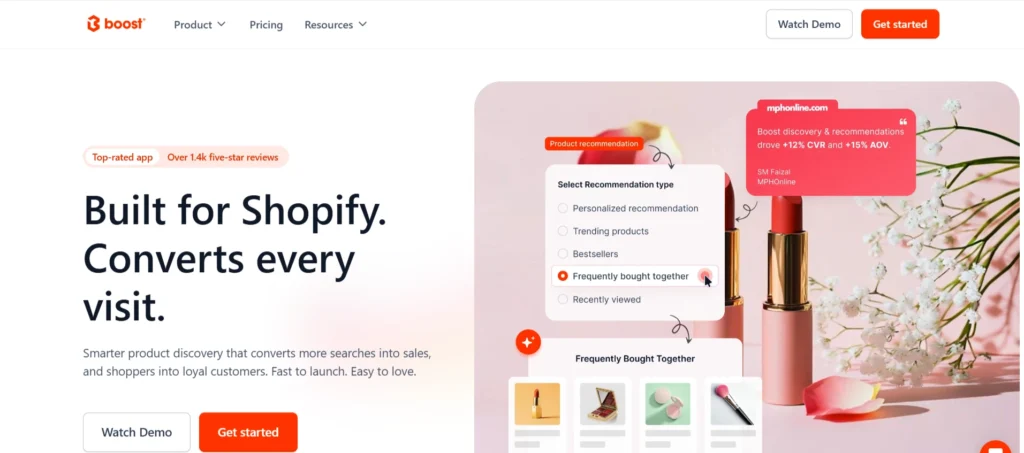
Boost AI Search became increasingly important because ecommerce catalogues expanded faster than many navigation systems evolved.
Customers rarely search using product taxonomy.
They search using intention.
That distinction matters operationally.
The strongest search systems increasingly behave less like filters and more like assisted discovery environments.
Where Boost AI Search performs especially well:
- large catalogues
- fashion
- supplements
- beauty
- electronics
- multi-category ecommerce
The operational advantage is reduced discovery friction across the buying journey.
AI Recommendations: Where Customer Intent Becomes Revenue Infrastructure
Product recommendations used to behave as generic upsells.
Modern recommendation systems increasingly operate contextually.
Timing.
Behaviour.
Category relationships.
Purchase patterns.
All influencing recommendations dynamically.
5. Rebuy

Rebuy became increasingly valuable because it helps brands connect customer intent with operational personalization.
The strongest recommendation systems do not simply push more products.
They reduce decision friction.
Relevant bundles.
Complementary items.
Contextual suggestions.
Post-purchase continuation.
The operational value comes from helping momentum continue naturally rather than interrupting it with random offers.
Many of the highest-performing recommendation, retention, and trust tools discussed here also appear in our guide to the best Shopify apps for conversion growth for brands optimizing conversion infrastructure operationally.
AI Creative Production: Why Ecommerce Teams Need Faster Campaign Systems
One of the least discussed ecommerce bottlenecks is creative velocity.
Ads fatigue quickly.
Campaigns require constant variation.
Assets multiply operationally.
This is where AI-assisted creative systems increasingly matter.
6. Canva + ChatGPT
The strongest ecommerce teams increasingly combine AI-assisted ideation with scalable creative production.
ChatGPT accelerates:
- hooks
- campaign angles
- messaging variations
- ad concepts
Canva operationalizes:
- adaptation
- resizing
- creative scaling
- campaign asset production
Together, these systems reduce the distance between:
campaign idea and market deployment.
That operational speed matters enormously inside modern paid acquisition environments.